
Maryland Native Trees: Washington Hawthorn – Crataegus phaenopyrum
Maryland Native Trees
Crataegus phaenopyrum – Washington Hawthorn
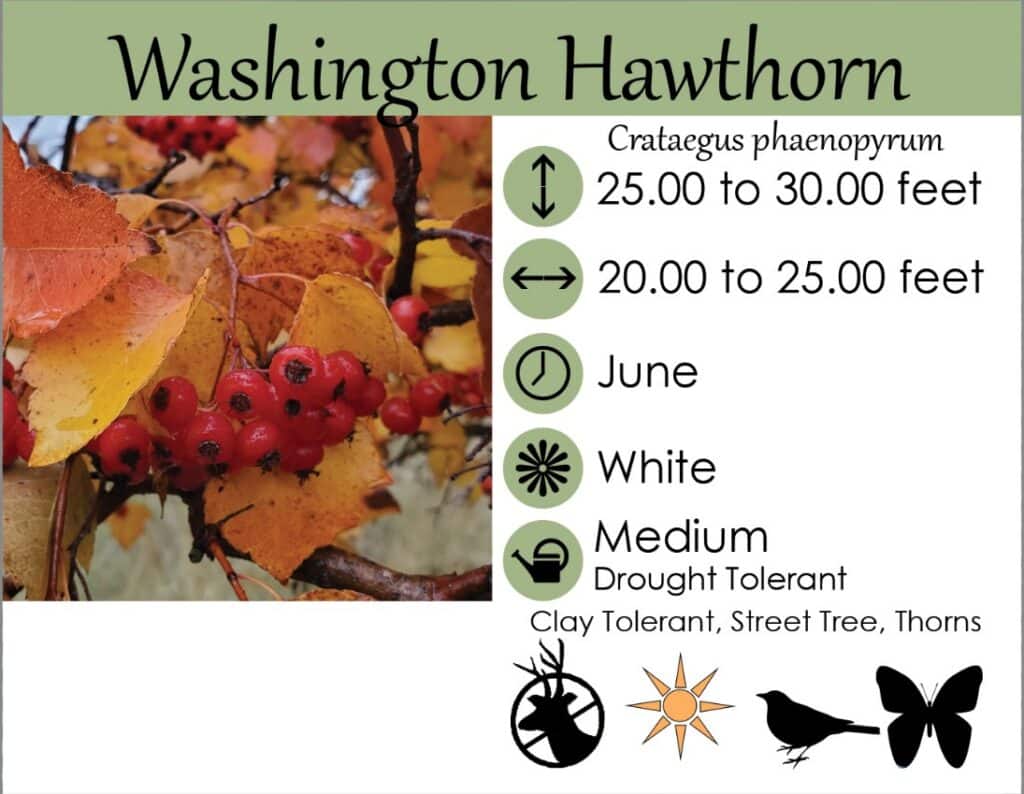
Washington Hawthorn (Crataegus phaenopyrum) is a native deciduous tree that stays relatively short, capping out at around 25 to 30 feet tall. Thriving in full sun conditions and moist soil, Hawthorns can also tolerate pollution, varied pH, and heavy clay soils. Part shade will reduce flowering.
Hawthorns can be grown as privacy screens in hedge rows, planted in groups, or planted alone as a specimen or street tree. While this species does not require multiple specimens to produce fruit, fruit production will increase when more Hawthorn trees are planted in proximity to each other.
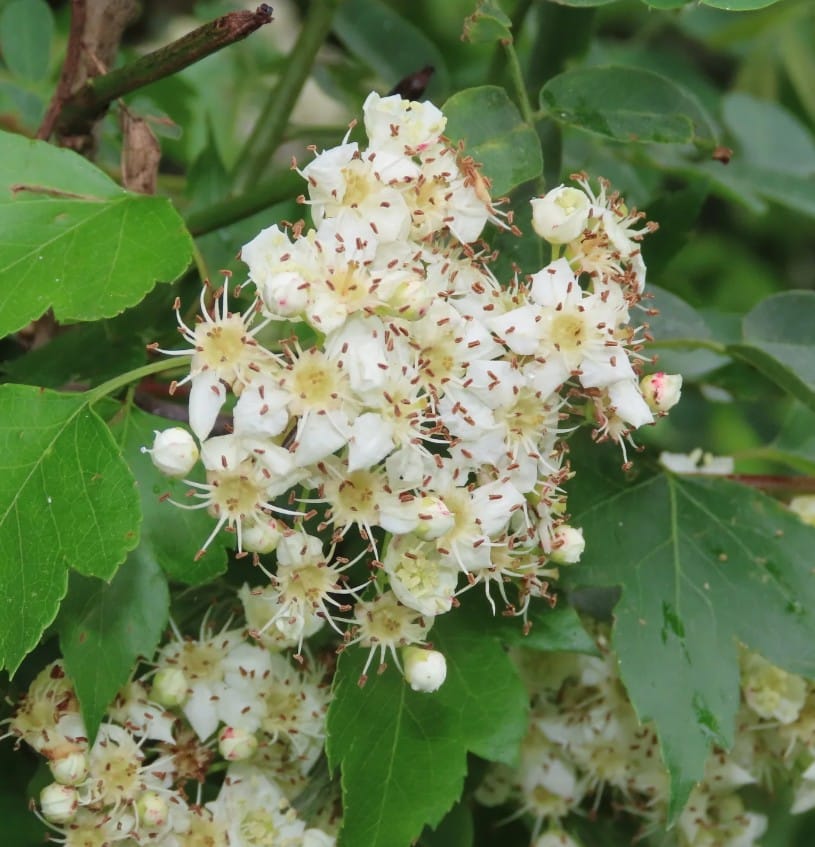
Clusters of small white flowers start blooming in early summer and are known to attract a large number of native bee species. In addition to providing nectar for pollinators, the Hawthorn is a larval host plant for Gray Hairstreak (Strymon melinus), Red-spotted Purple (Limenitis arthemis astyanax), and Viceroy (Limenitis archippus). Hummingbirds and butterflies nectar from the blooms as well.
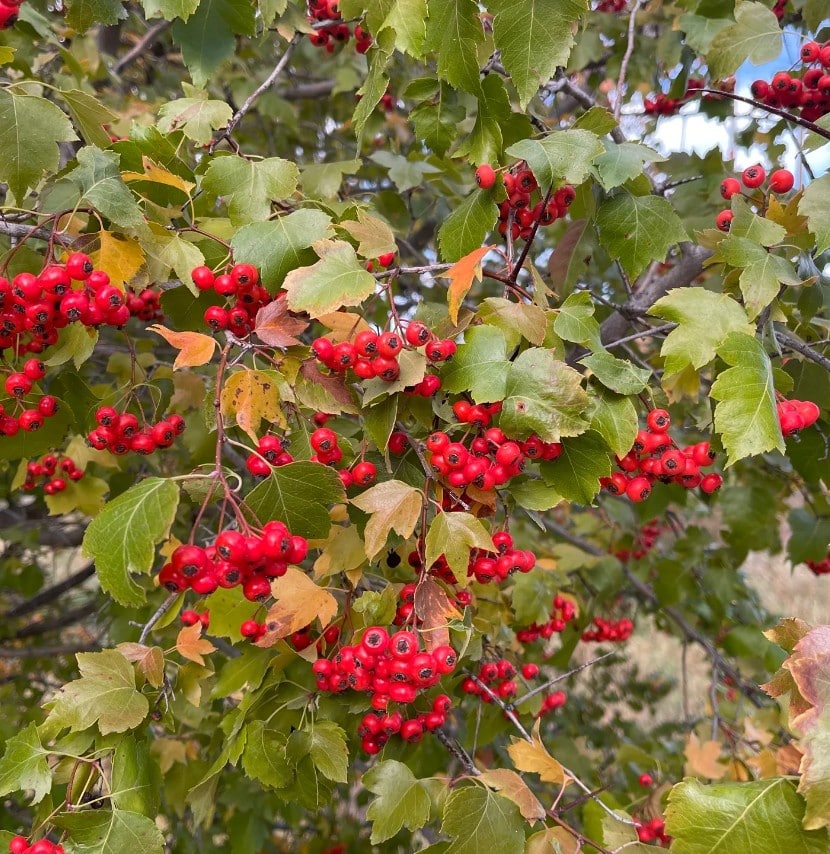
Small red fruits appear from mid-fall into early winter, providing a food source for wildlife such as cedar waxwings, quail, wild turkeys and small mammals. The dense branches also provide nesting protection. The red fruits are edible with a mild flavor best eaten mid to late Fall, which can be eaten raw or cooked. When trying new foods, make sure you only try a small amount at first.
Purchase Crataegus phaenopyrum here!
Plant Information
Common Name: Washington Hawthorn
Type: Tree
Family: Rosaceae
Height: 25.00 to 30.00 feet
Spread: 20.00 to 25.00 feet
Bloom Time: June
Bloom Description: White
Sun: Full sun (Part shade will affect flowering)
Water: Medium
Maintenance: Medium
Suggested Use: Hedge, Street Tree, Flowering Tree
Flower: Showy, Fragrant
Leaf: Good Fall
Attracts: Birds, Butterflies
Fruit: Showy, Edible
Other: Thorns
Tolerate: air pollution, clay, drought
(Information from Missouri Botanical Garden, University of Maryland Extension, NC State Extension, Lady Bird Johnson Wildflower Center)