
Maryland Native Plants: Rosebay Rhododendron – Rhododendron maximum
Maryland Native Plants
Rosebay Rhododendron – Rhododendron maximum
About Note About ‘Rhododendrons’
Terminology around Rhododendrons can be a little confusing: while Rhododendron is the genus name, it also refers to specific species within that genus. The genus includes true rhododendrons such as the Rosebay (R. maxima) and the Catawba Rosebay (R. catawbiense), as well as a variety of native Azaleas such as the Sweet Azalea (R. arborescens), Swamp Azalea (R. viscosum), Pinxterbloom Azalea (R. periclymenoides), and Flame Azalea (R. calendulaceum).
For the purposes of this post, the name Rhododendron will refer to the species rather than the genus.
Planting and Growing
Rhododendrons should be planted in full to dappled shade, in moist but well-draining soils. Rhodys strongly prefer richly organic, acidic soils and will not tolerate dense clay. In poor draining soils, the roots may rot. Drainage can be improved by planting the root ball up high in the soil, and by avoiding planting other plants close to its base. A mulch of wood chips, bark, or pine needles helps retain moisture and stabilize soil temperatures.
Habit
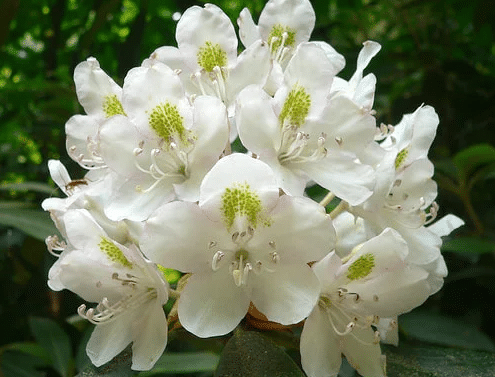
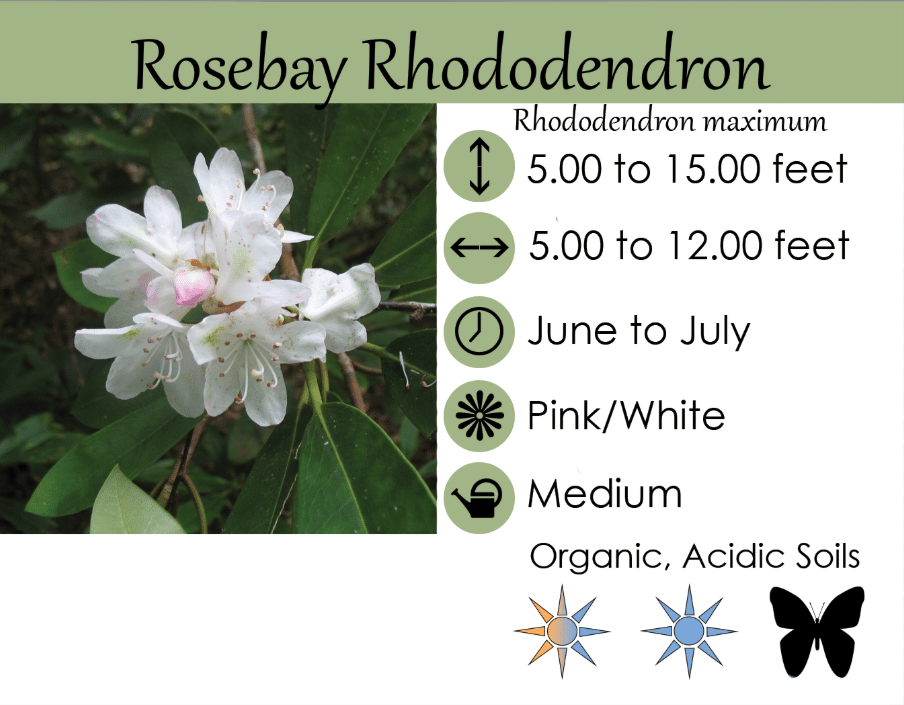
Rosebay Rhododendrons grow fairly upright, with loosely growing multi-stemmed branches. The light brown bark develops scales with age, and the large, oblong leaves are evergreen! R. maxima is a relatively late blooming species, and it attracts bees, butterflies, hummingbirds, and other pollinators to its pinkish-white flowers. These Rhodys can grow up to 15 feet tall and around 12 feet wide, making them an excellent option for large shade gardens or for planting between two windows.
Is a Rhodo Right For You?
If you have heavy clay soils, very basic soils, intense deer pressure, or direct sun, consider another species of shrub for your planting needs. Avoiding overwatering and amending the soil with organic material can help prevent common issues with Rhododendrons such as root rot.
If you have well-draining soils in full to dappled shade conditions and acidic soil, then a Rhododendron may be an excellent option for your yard!
***
***
Plant Information
Common Name: rosebay rhododendron
Type: Broadleaf evergreen
Native Range: Eastern North America
Height: 5.00 to 15.00 feet
Spread: 5.00 to 12.00 feet
Bloom Time: June to July
Bloom Description: Rose-purplish to pink to white
Sun: Part shade to full shade
Water: Medium
Maintenance: Medium
Flower: Showy
Leaf: Evergreen
Other: Winter Interest
Tolerate: Rabbit, Heavy Shade
(Information from Missouri Botanical Garden, NC State Extension, NC State Cooperative Extension)
~~~~