
Maryland Native Plants: Hamamelis virginiana- Witch Hazel
Maryland Native Plants
Hamamelis virginiana – Witch Hazel
Planting and Growing
Hamamelis virginiana, commonly called Witch Hazel, is a fall blooming shrub/tree native to woodlands, forest edges, and stream banks. It ranges in size from 8-20 feet tall and wide, is often multi-stemmed, and typically has a spreading, open crown. Witch Hazel is unique because of its showy fall or winter blossoms, often appearing after the leaves have dropped.
Witch hazel is clay tolerant and grows best in medium to moist soils. It can stand both full sun and full shade, but often blooms better in full sun. Because Witch Hazel blooms well after the green of summer and colors of fall have faded, it makes an excellent specimen plant. Otherwise, it can be used for screening in shrub borders, and makes a great addition to rain gardens.
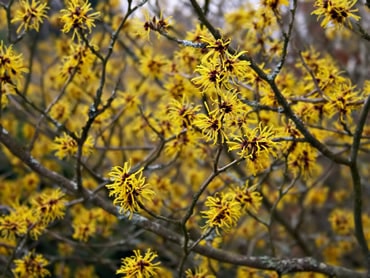
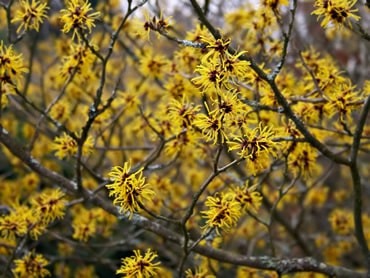
Witch Hazels’ fragrant yellow flowers bloom after leaves have fallen.

Witch Hazel with leaves in Summer.

Close up of Witch Hazel leaves.

Bright yellow foliage in Autumn.
Wildlife Benefits
Witch Hazel is a host plant for 68 species of butterfly and moth, most notably the Witch Hazel Dagger Moth (Acronicta hamamelis), a rather plain looking, cold-hardy moth that serves as one of Witch Hazel’s main pollinators.
In addition to cold-hardy moths, Witch Hazel provides food for ruffed grouse and fox squirrels. Although considered deer resistant, white-tailed deer may browse small twigs and foliage.

Witch Hazel Dagger Moth larva.

Witch Hazel Dagger Moth
Fun Facts
Witch Hazel is the only Maryland native shrub to bloom in Winter.
The genus name derives from the Greek words hama, which means “together,” and melon, which means “fruit.” This refers to the plants habit of having both flowers and fruit present at the same time.
Despite its common name, Witch Hazel has nothing to do witches or magic. Instead, “witch” most likely derives from the Old English word wych, meaning “to bend,” referring to the pliable nature of the branches and wood. That said, Witch Hazel was used by early American colonists as a divining rod to find water, a practice sometimes called “water witching.”
***
***
Plant Information
Latin name: Hamamelis virginiana
Common Name: Witch Hazel
Type: Deciduous shrub
Family: Hamamelidaceae
Native Range: Eastern North America
Zone: 3 to 8
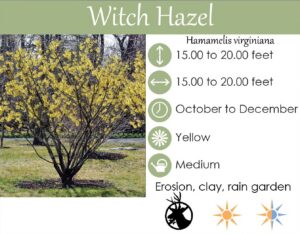
Height: 15.00 to 20.00 feet
Spread: 15.00 to 20.00 feet
Bloom Time: October to December
Bloom Description: Yellow sometimes tinged with orange or red
Sun: Full sun to part shade
Water: Medium
Maintenance: Low
Suggested Use: Hedge, Naturalize, Rain Garden
Flower: Showy, Fragrant
Leaf: Good Fall
Other: Winter Interest
Tolerate: Deer, Erosion, Clay Soil
Plant information from the Missouri Botanical Garden, Lady Bird Johnson Wildflower Center, NC State Extension, University of Maine Extension, and Harvard Arboretum
~~~~