Rethink the Fall Cleanup: An Eco-Friendly Approach to Your Maryland Garden
Rethink the Fall Cleanup: An Eco-Friendly Approach to Your Maryland Garden
Fall is here and that usually means it’s time to start cleaning up the garden. But an eco-friendly fall cleanup may look a little different from the traditional approach of cutting everything back, removing every leaf, and leaving garden beds neat and bare for winter.
In a native garden, what we leave behind can be just as important as what we clean up. Fallen leaves, dried flower heads, plant stems, and other natural materials all have a role to play in the landscape. By changing the way we approach fall cleanup, we can prepare our Maryland gardens for winter while continuing to provide valuable habitat for wildlife.
What Is an Eco-Friendly Fall Cleanup?
An eco-friendly fall cleanup isn’t about ignoring your garden until spring. Instead, it means being intentional about what needs to be removed and what can remain. Traditional fall cleanup often focuses on making the landscape look as tidy as possible. Perennials are cut to the ground, leaves are removed, and garden debris is hauled away; but when we remove all of that natural material, we may also be removing valuable habitat.
Native gardens are living ecosystems. Even after the flowers have faded, the garden continues to provide food, shelter, and protection for insects, birds, and other wildlife.
The goal isn’t necessarily to clean up less. It’s to clean up differently.
Leave the Leaves in Your Garden Beds
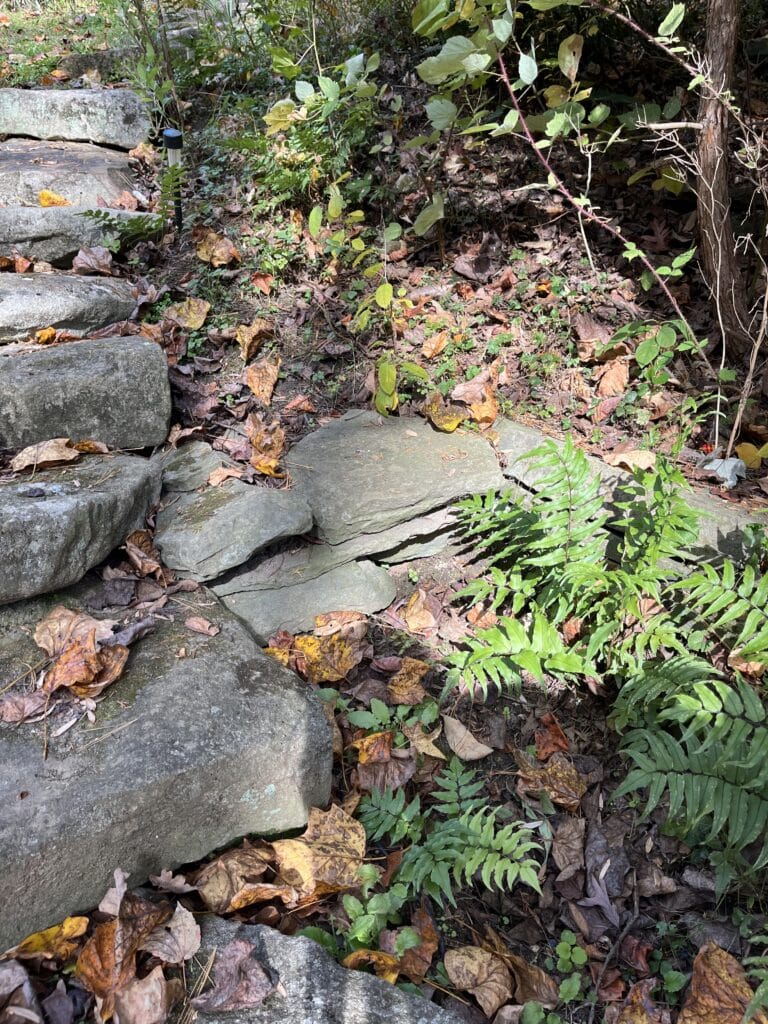
One of the easiest ways to make your fall landscaping more eco-friendly is simple: leave the leaves! Fallen leaves are a natural part of the ecosystem. In wooded areas, no one comes along each fall to rake everything away. Leaves collect beneath trees and shrubs, slowly breaking down and returning organic matter to the soil. We can recreate some of that natural process in our own landscapes. Instead of removing leaves from the property, consider moving leaves from lawns, pathways, patios, and other areas where they aren’t wanted into garden beds where they can be useful. A layer of leaves can help protect the soil, conserve moisture, add organic matter as it decomposes, and provide habitat for insects and other small creatures. It can also reduce our reliance on purchased mulch.
What About Leaves on the Lawn?
Leaving the leaves doesn’t necessarily mean leaving thick layers of leaves everywhere. Heavy leaf cover can smother turfgrass, so leaves can still be removed from lawn areas. Instead of bagging them and hauling them away, consider relocating them into garden beds or other naturalized areas of the landscape.
It’s a simple shift: rather than treating leaves as waste, think of them as a resource your landscape produces every year.
Don’t Cut Everything Down in the Fall
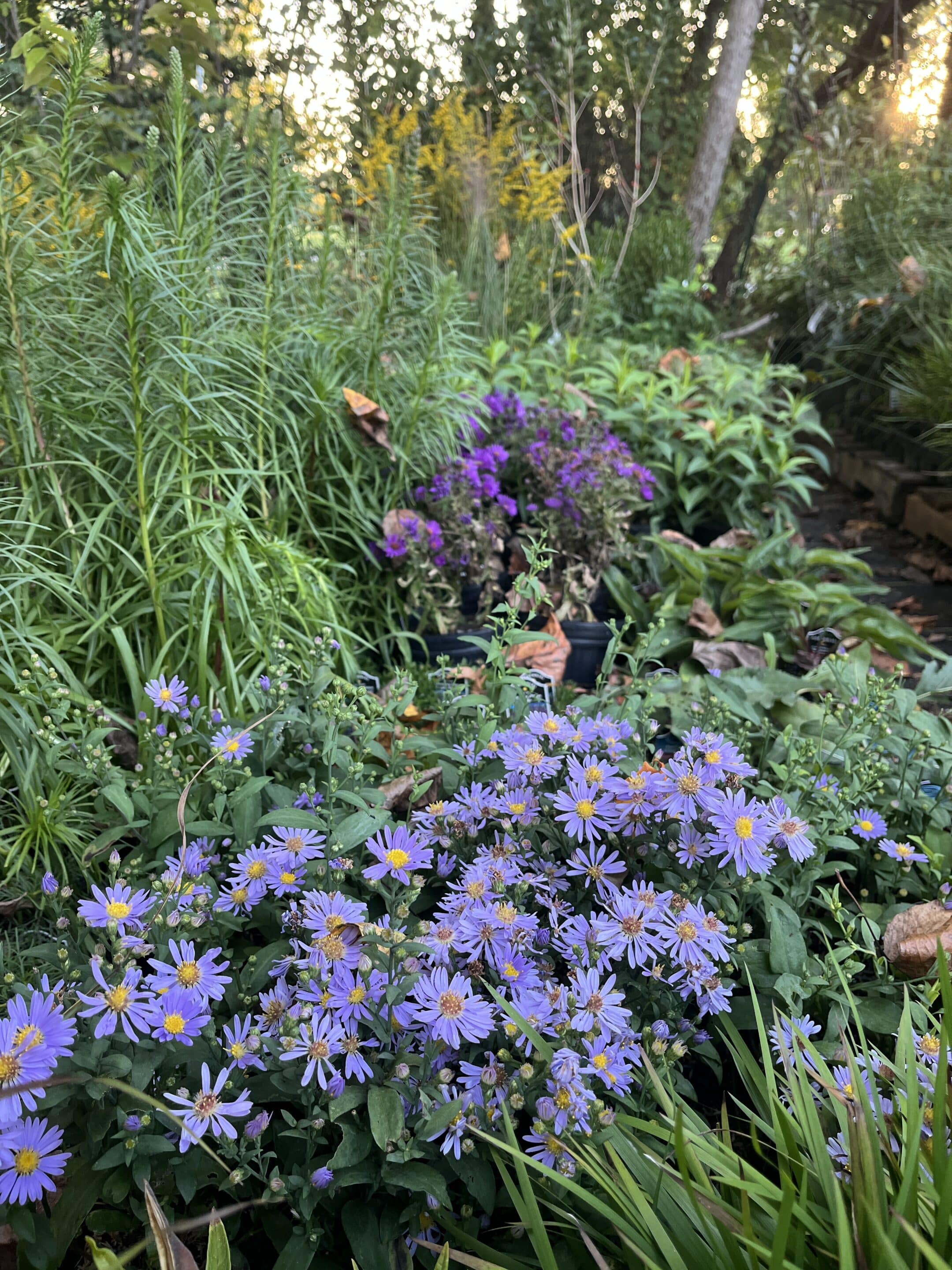
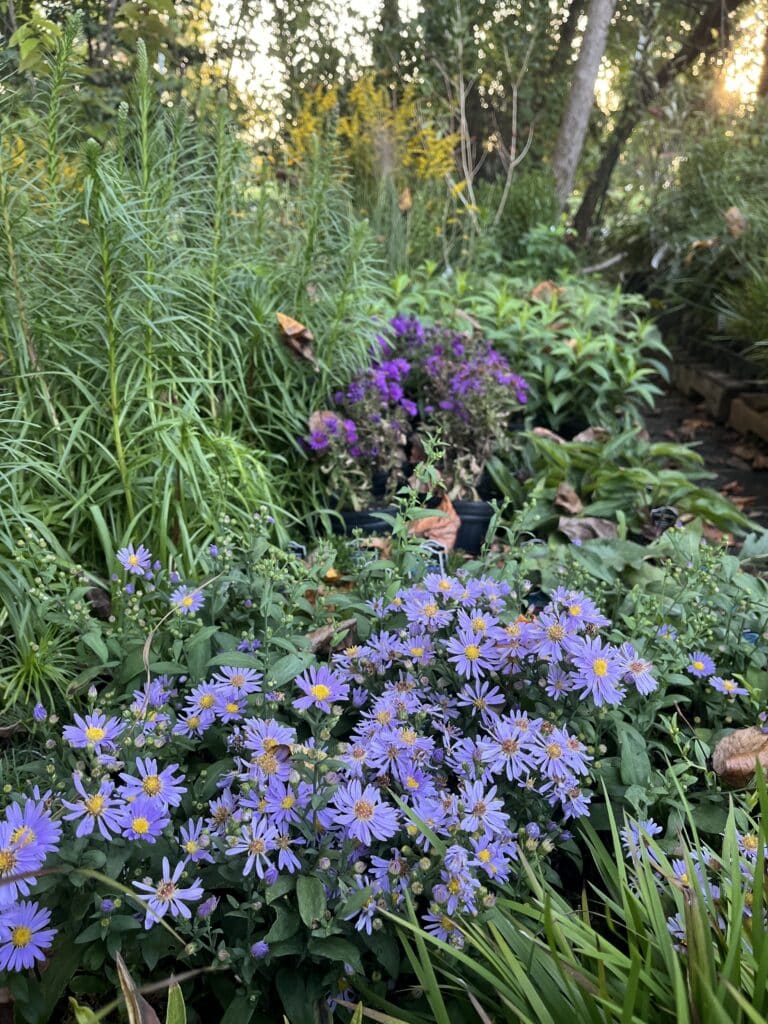
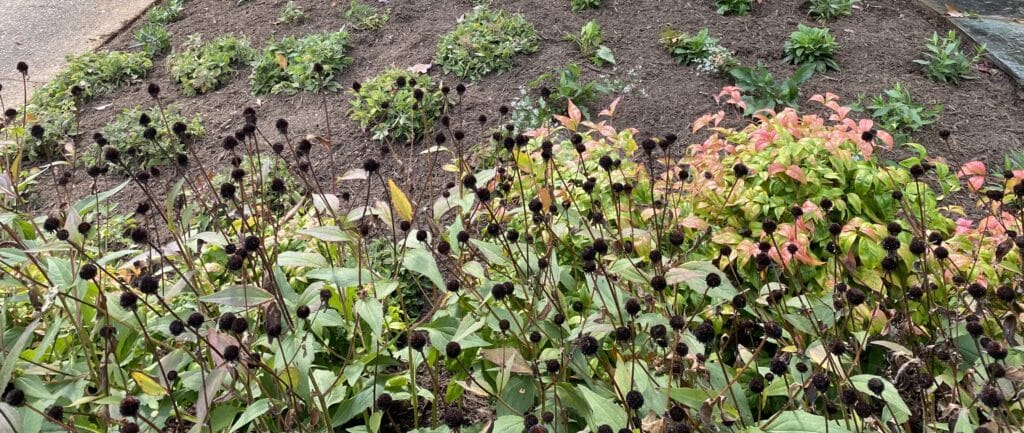
As native perennials finish blooming, it can be tempting to cut the entire garden down to the ground. But those dried stems and seed heads still have work to do. Standing plant material can provide structure and habitat throughout the winter. Seed heads can also offer a natural food source for birds.
Leaving plants standing has another benefit: winter interest.
Native gardens don’t have to disappear when the growing season ends. Dried flowers, grasses, seed heads, and stems add texture and structure to a winter landscape. Frost and snow can transform those same plants into some of the most interesting features in the garden. Rather than cutting everything back at once, fall cleanup can be selective. Remove material that is diseased, problematic, blocking pathways, or creating other issues while allowing beneficial plant material to remain.
Native Plants Continue Supporting Wildlife After They Bloom
One of the benefits of landscaping with Maryland native plants is that their value extends beyond their bloom time. We often think about native plants in terms of flowers and pollinators during spring and summer, but the relationship between native plants and wildlife continues throughout the year. A garden filled with native plants can provide layers of habitat from leaf litter at ground level to standing stems, seed heads, shrubs, and trees.
That means the “messy” parts of a fall garden may actually be some of its most valuable features.
An Eco-Friendly Garden Can Still Look Intentional
Leaving leaves and standing plants doesn’t mean your landscape needs to look forgotten or unmaintained. A thoughtful eco-friendly fall cleanup can maintain intentional edges, clear walkways, remove weeds, prune where appropriate, and redistribute leaves while preserving the parts of the garden that provide ecological value. Defined garden edges and pathways can make a tremendous difference. They create a visual boundary between the cultivated garden and the surrounding landscape, allowing natural materials to remain without making the space feel neglected.
Eco-friendly landscaping isn’t about choosing between a beautiful garden and a functional ecosystem. With thoughtful design and maintenance, a landscape can be both.
Rethink What “Clean” Means in the Garden
For years, homeowners have been encouraged to put their gardens “to bed” by cutting everything down and hauling everything away. But nature doesn’t work that way. Leaves fall. Seed heads remain. Stems stand through the winter. Organic material breaks down and returns to the soil. By working with these natural processes instead of removing them, we can create healthier landscapes while providing more resources for the wildlife that shares our gardens. This fall, consider looking at your landscape a little differently. Instead of asking, “What should I remove?” ask, “What can I leave?” A few leaves, stems, and seed heads left behind today can help your Maryland native garden continue doing its job long after the growing season has ended.
Contact LGS to Schedule your estimate today and start creating a landscape that benefits both your property and the environment.
Check out our other project before and after blogs here!