Maryland Native Plants: Acer Rubrum – Red Maple
Maryland Native Plants
Acer Rubrum – Red Maple
Planting and Growing
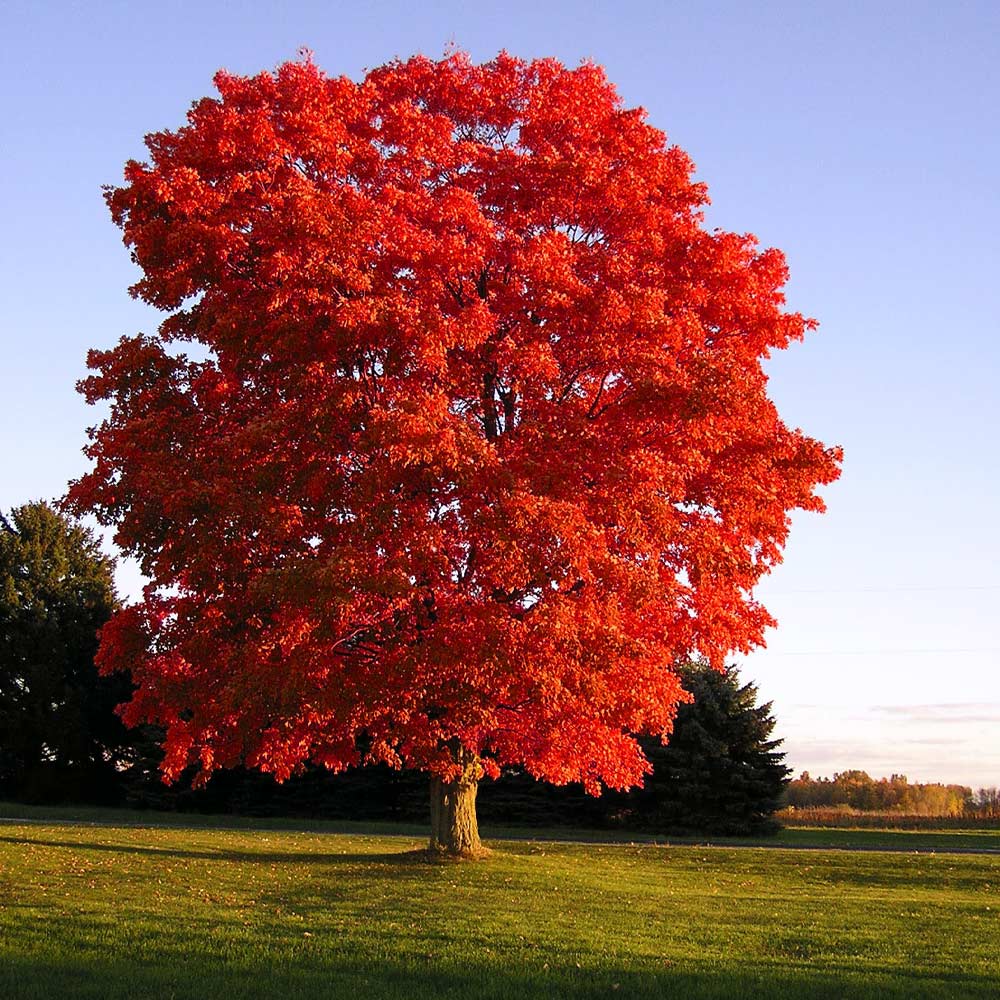
Acer Rubrum, the Red Maple, accents our Autumn landscapes with brilliant displays of red foliage. In the wild, Red Maples grow in upland deciduous forests, though they can also be found in swamps and wet bottomlands. Their range extends from Quebec south to Florida, and West into Texas. They are easily grown in medium to moist, slightly acidic soils. They thrive in full sun but can stand partial shade and are often found as understory trees in mixed hardwood forests.
Red Maples range in height from 40-100 feet with narrow to rounded crowns. Young trees have smooth light gray bark, which becomes more cracked and fissured with age. The leaf stalks, flowers, and fruits are bright red, as is their vibrant fall foliage, which makes them well suited to planting in lawns as specimen trees. Plant away from driveways, sidewalks, and foundations, as their shallow, fibrous roots can warp and crack them. These roots can also make planting underneath the tree a challenge. Also, consider planting them away from houses and other structures as wind and ice can cause larger limbs to snap.
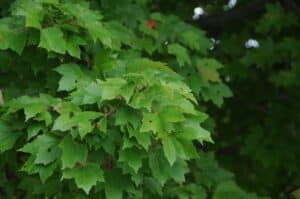
Red Maple with summer foliage.
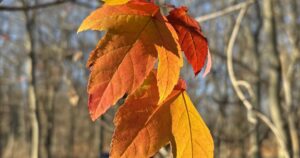
Red Maple with Autumn foliage.
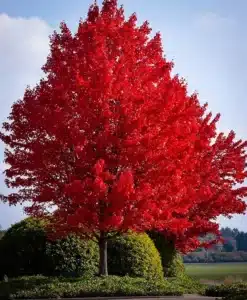
Red Maple on full display.
Wildlife Benefits
Red Maples are not deer resistant and often experience deer browse, so caging off young trees is recommended. Squirrels, chipmunks, and a variety of birds feast on their seeds; birds use spring catkins (flower clusters) as nest liner. Woodpeckers may nest in hollow cavities in maple trunks.
In addition to mammals and birds, Red Maples support a variety of insect life as well. Inchworms live on the trees, and the Red Maple is a host plant to many species of moth, notably the Rosy Maple Moth (Dryocampa rubicunda), Maple Looper (Parallelia bistriaris), and Baltimore Bomolocha (Bomolocha baltimoralis). Bees use spring flowers as a source of nectar.
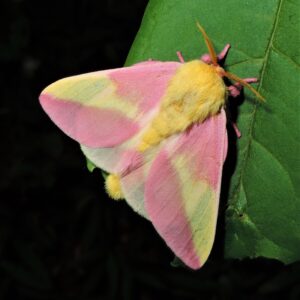
Rosy Maple Moth
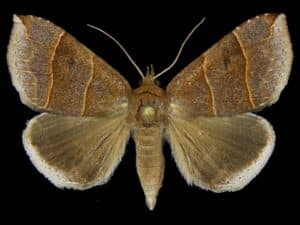
The Maple Moth
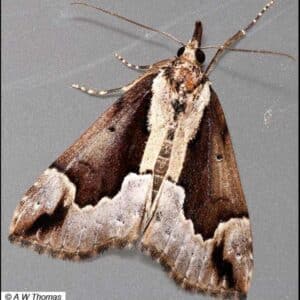
Baltimore Bomolocha
Fun Facts
Red Maple seeds can be harvested and eaten, though the time and effort needed to process the seeds may not make this practice worth your while.
Red Maple sap contains sugars which can be processed into a syrup, though the return is only about half that of Sugar Maples (Acer saccharum).
Native Americans used the bark to make dye, and the sap as a sweetener for food. The wood is used in furniture making and often turned into pulpwood.
***
***
Plant Information
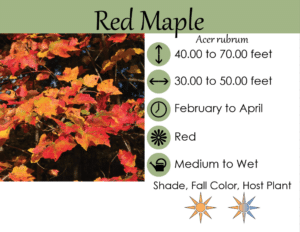
Common Name: Red Maple
Type: Tree
Height: 40.00 to 120.00 feet (commonly reaches 90 as a garden tree)
Spread: 30.00 to 50.00 feet
Root: Fibrous – Shallow
Bloom Time: February to April
Bloom Description: Red
Sun: Full Sun to Part Shade
Water: Medium to Moist
Maintenance: Root system is shallow and needs to breath, don’t over mulch
Suggested Use: Shade Tree
Flower: Showy
Attracts: Bees, squirrels, birds, etc.
Tolerate: Drought & Flooding
Host Plant: Imperial Moth (Eacles imperialis), Cecropia Moth (Hyalophora cecropia), Rosy maple moth (Dryocampa rubicunda), and many more.
Information from NC State Extension, Lady Bird Johnson Wildflower Center, National Wildlife Federation, Mt. Cuba Center, Missouri Botanical Garden
~~~~