
Maryland Native Plants: Gaultheria procumbens – Wintergreen
Maryland Native Plants
Gaultheria procumbens – Wintergreen
Planting and Growing
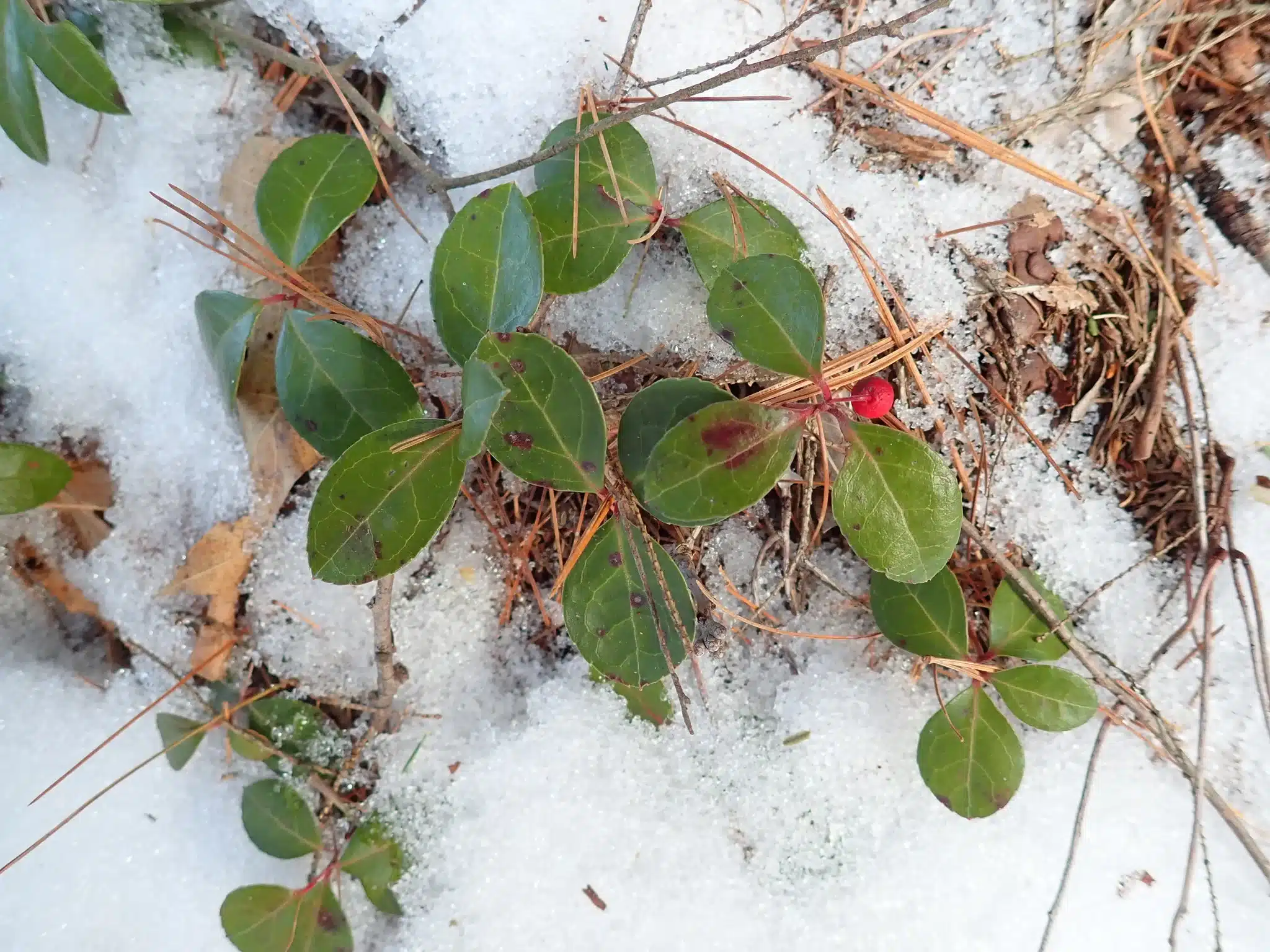
Gaultheria procumbens, commonly called Wintergreen, is a creeping, woody, evergreen groundcover of the Heath family. In the wild, it grows in hardwood forests throughout Eastern North America. It is found throughout Maryland, including the Eastern Shore.
Wintergreen grows to only about 6″ in height. Its short, erect stems are covered in glossy, aromatic, dark green leaves, which may turn purple in the Fall. White, bell-shaped flowers bloom in June and July, and eventually form bright red berries which persist through winter. The berries are edible, with a sweet, subtle, minty taste, often used as a flavoring for gum and toothpaste. Though slow-growing, Wintergreen spreads 1′-3′ feet via rhizomes. Given time they form a dense carpet of greenery that makes an excellent, weed-suppressing groundcover.
Plant Wintergreens in evenly moist, acidic, well-drained soils. Mature plants can handle drier conditions. They thrive in part shade to full shade, but do not tolerate full sun. Plant them in shady rock gardens, woodland gardens, or along shady foundations. For greatest effect as a groundcover, plant multiple plants 10″-14″ apart.
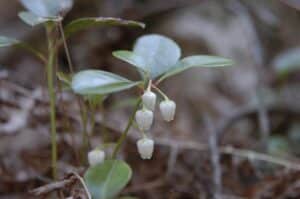
Wintergreen with flowers
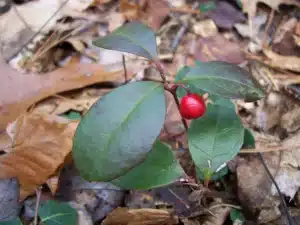
Wintergreen with berry

Wintergreen as a groundcover
Wildlife Benefits
Wintergreen is an important Winter food source for mammals such deer, red fox, black bear, chipmunks, and squirrels. Birds also eat the berries, including grouse, bobwhites, turkeys, sparrows, and cedar waxwings.
Although not considered a host plant, the larvae of the Tortricid Moth (Rhopobota naevana) has been known to eat Wintergreen leaves. The flowers attract bees, which are the primary pollinator of Wintergreen.
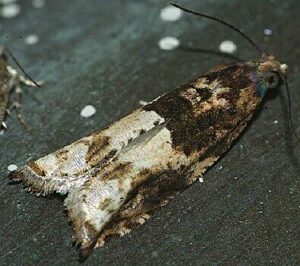
Tortricid Moth (Rhopobota naevana)

Cedar Waxwings eat the berries of Wintergreen

Wintergreen berries are a favorite of Bobwhite Quail
Fun Facts
As members of the Heath family, Ericaceae, Wintergreens are related to blueberries, huckleberries, mountain laurels, and partridge berries.
The generic name Gaultheria is derived from the name of Jean-Francois Gaultier, the king’s physician in the French colony of Quebec from 1742 until 1756. The specific name procumbens is derived from Latin, and means “to lie down,” in reference to the plants low, spreading habit.
The leaves of Wintergreen were once used to make an oil that was an astringent and diuretic. Berries of Wintergreen can be eaten raw, or added to pastries and salads.
***
***
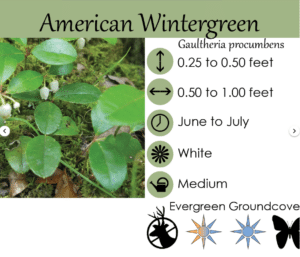
Plant Information
Common Name: wintergreen
Type: Broadleaf evergreen
Family: Ericaceae
Height: 0.25 to 0.50 feet
Spread: 0.50 to 1.00 feet
Bloom Time: June to July
Bloom Description: White
Sun: Part shade to full shade
Water: Medium
Maintenance: Low
Suggested Use: Ground Cover, Naturalize
Flower: Showy
Leaf: Evergreen
Fruit: Showy, Edible
Other: Winter Interest
Tolerate: Heavy Shade
***
Information from NC State Extension, UMD Extension, Mt. Cuba Center, & Missouri Botanical Gardens
~~~~