Maryland Native Pollinators and Plants to Support Them – Masked Bee
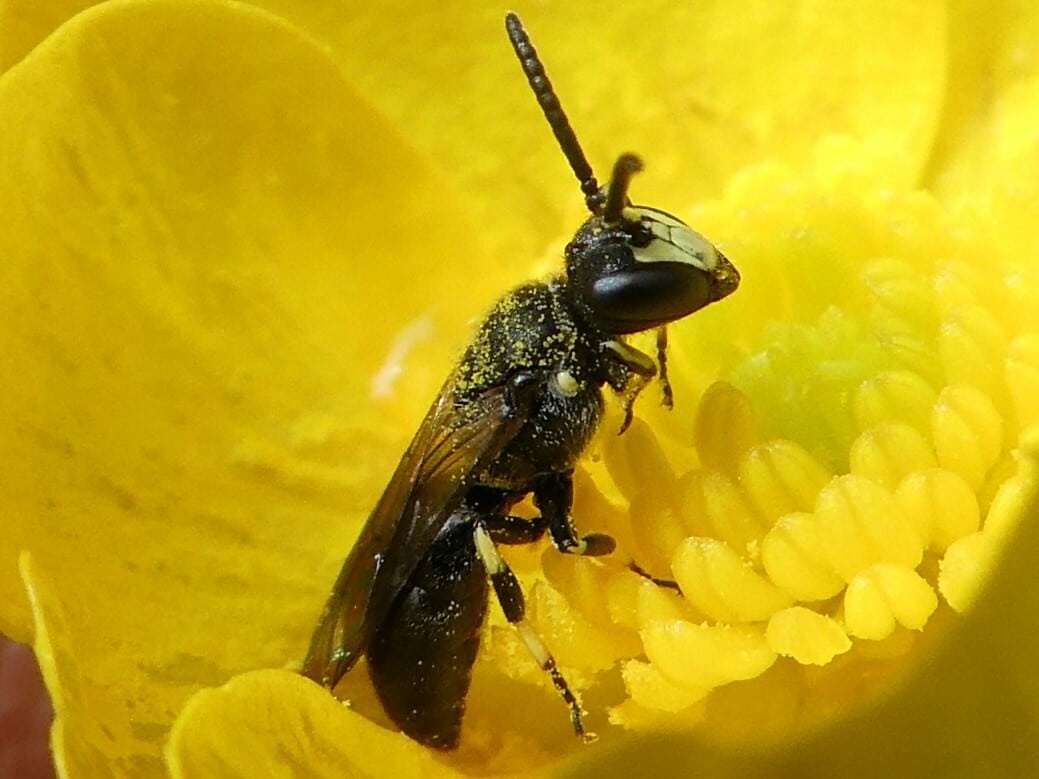
Native Bee Spotlight: Masked Bee (Hylaeus spp.)
We get a lot of buggy visitors to our nursery in the spring and summer, and one of the more common visitors is one you may not have heard of: masked bees (Hylaeus spp.). These bees are nearly hairless and to the untrained eye look much more like a wasp than a bee. While most bees carry pollen in hairs on their hind legs or abdomen, masked bees carry pollen inside themselves, meaning they don’t need to be hairy. Because of this, masked bees are not always the most effective pollinators (more hair = more potential to transfer pollen), but they will often spend a long time digging around in flowers and coating the few hairs they do have with pollen, and thus still perform pollination. Masked bees also have an amazing ability: they can secrete a cellophane-like substance with which they coat the walls of their nests to protect their young from flooding and parasites.
Masked bees are generalist foragers and visit many types of flowers, but two of their favorites types are Alexanders (Zizia spp.) and bonesets (Eupatorium spp.).
Check out our selection of: Zizia, Bonesets, Roses, and more!
Species Information
Common Name: Masked Bee
Scientific name: Hylaeus spp.
Family: Colletidae
Color: yellow and black
Size: 0.2-0.3″ long
Host Plant: many, examples of preferred plants are Zizia and Eupatorium
Credit for featured image: Bruce Cook, @raffib128 on iNaturalist
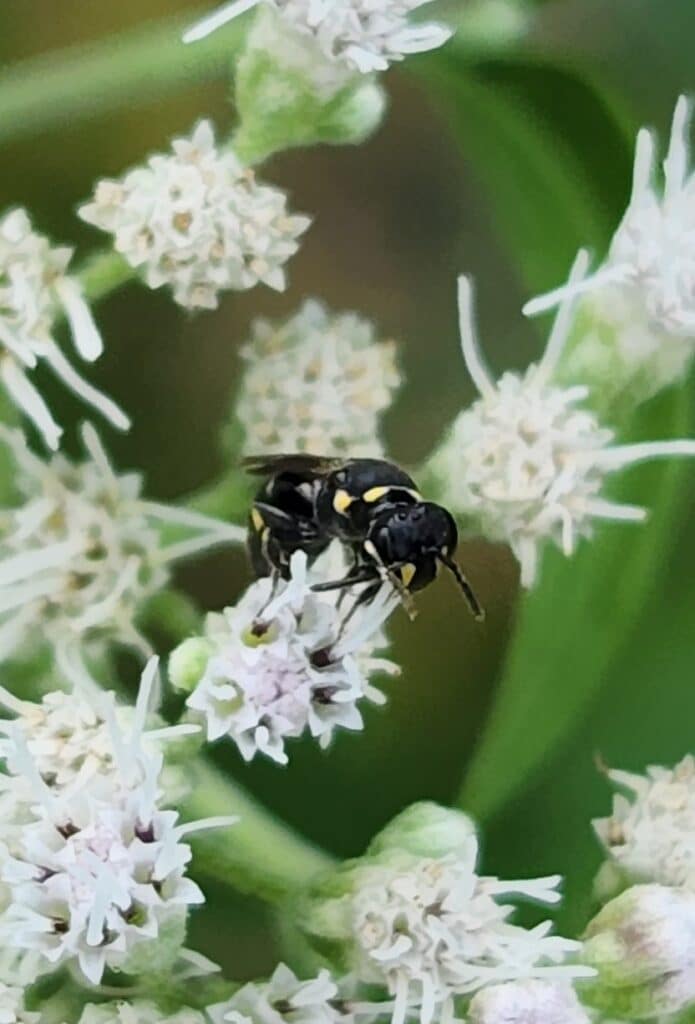
Masked bee on boneset (credit: Francis Mullan)

Masked bee on goldenrod (credit: Francis Mullan)

Masked bee on Rosa palustris (credit: Francis Mullan)

Masked bee on Rosa palustris (credit: Francis Mullan)
*