
Maryland Native Plants: Asclepias purpurascens – Purple Milkweed
Maryland Native Plants
Asclepias purpurascens – Purple Milkweed
Planting and Growing
Maryland is home to many species of milkweed. Many are common, but some, like Purple Milkweed, are more rare.
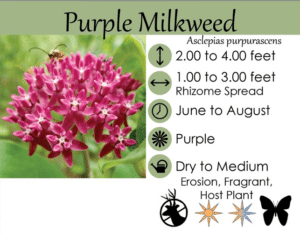
Purple milkweed (Asclepias purpurascens) is a flowering perennial that grows 2-4 feet tall and 1-3 feet wide. It grows best in full sun to part shade in dry to medium garden soils. It can tolerate moist soil provided it is well drained. Purple milkweed is drought tolerant and can be easily grown in dry garden borders, meadows, open woods, and functions best when paired with other milkweed species in pollinator gardens.
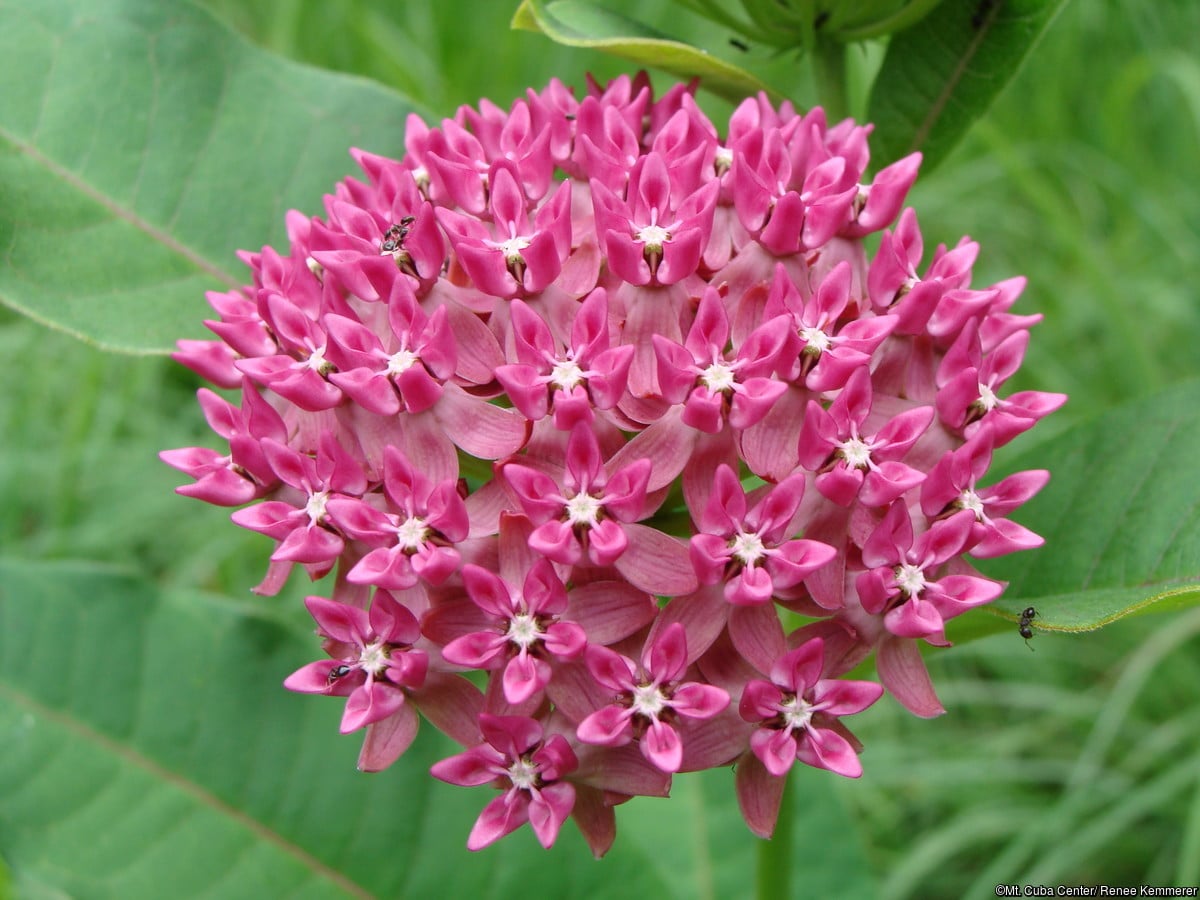
Purple milkweed is similar to common milkweed (Asclepias syriaca) in size and appearance, but differs in a few notable ways. First, the flowers, which bloom from June through August, are often a rich purple as opposed to the light pink flowers of common milkweed. Leaves are similar but more pointed and more veined. In addition, purple milkweed spreads through self-seeding and underground rhizomes, but is not as aggressive of a spreader as common milkweed, making it better suited for smaller garden beds.
Purple milkweed has few diseases, pests or predators to worry about. Like other milkweeds, the plant produces a white latex that is unpalatable to deer and rabbits; although some deer, especially when young, may still browse the plant. Purple milkweed is host to Monarch caterpillars which feed on the leaves but will not kill the plant. In addition, aphids may congregate on plants but rarely cause serious harm. They can be controlled by moving your fingers up and down plant stalks or leaves to crush them. Avoid pesticides or sprays as these may also be harmful to Monarch caterpillars.
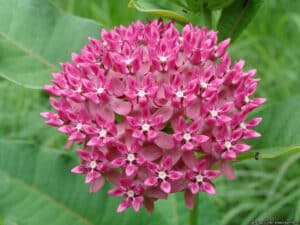
Purple Milkweed infloresence – image from Mt. Cuba
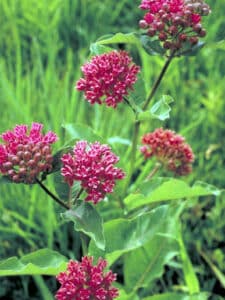
Blooms on a purple milkweed.
Wildlife Benefits
As mentioned, Purple Milkweed is a host plant for monarch butterflies, who use the plant as a vital source of nectar and a place to lay their eggs. Once hatched, the larvae live on the plant, feeding on its leaves. The larvae consume and store the toxic compounds contained within the milkweed’s latex, which then acts as a deterrent against predators. The toxins remain in their bodies even after pupating into butterflies.
In addition to monarchs, purple milkweed is also host to the milkweed tussock moth, a small, gray-winged moth with a bright orange thorax. The flowers attract numerous other butterflies as well, from skittish skippers, to bold swallowtails. Milkweed beetles also call this plant home, feeding on its leaves and storing the toxic compounds within themselves just like the monarchs. Purple Milkweed is a source of nectar for long-tongued bees, and even hummingbirds.
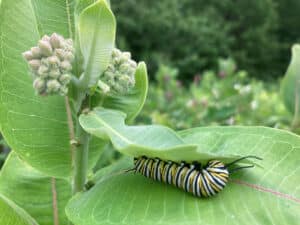
Monarch caterpillar eating a milkweed leaf.
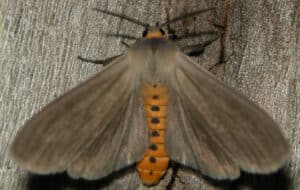
A milkweed tussock moth.
Maryland Conservation Status
Despite being native to Maryland, Purple Milkweed populations are scattered few and far between. Often only single plants are found in the wild, rather than large colonies. In fact, purple milkweed is listed as an S2 species by the Maryland Department of Natural Resources, meaning wild populations are rare and imperiled. Population declines are attributed to habitat loss, frequent mowing along highways and roadsides which prevents the plant from flowering, and gene swapping with common milkweed which results in sterile seeds.
***
Sources
North Carolina State Extension
U.S. Department of Agriculture
Maryland Department of Natural Resources
***
Purple Milkweed is unavailable online but is available in the nursery as plugs. Come shop today!
***
Plant Information
Common Name: Purple Milkweed
Type: Herbaceous perennial
Family: Apocynaceae
Height: 2.00 to 4.00 feet
Spread: 1.00 to 3.00 feet
Bloom Time: June-August
Bloom Description: Rose-pink to purple
Sun: Full sun to part shade
Water: Dry to medium
Maintenance: Low
Suggested Use: Naturalize
Flower: Showy
Leaf: Ovate to elliptic
Attracts: Butterflies
Tolerate: Deer, Drought, Erosion, Dry Soil, Shallow-Rocky Soil
~~~~