
Maryland Native Plants: Bignonia capreolata – Crossvine
Maryland Native Plants
Bignonia capreolata – Crossvine
Planting and Growing
Bignonia capreolata, commonly called Crossvine, is a semi-evergreen vine in the Trumpet Vine family, Bignoniaceae. It is native to the Southeastern and Southcentral United States. In Maryland, it is primarily found in the Coastal region. In the wild, it grows in swampy woodlands, moist forests, on fencerows, and along sunny shorelines.
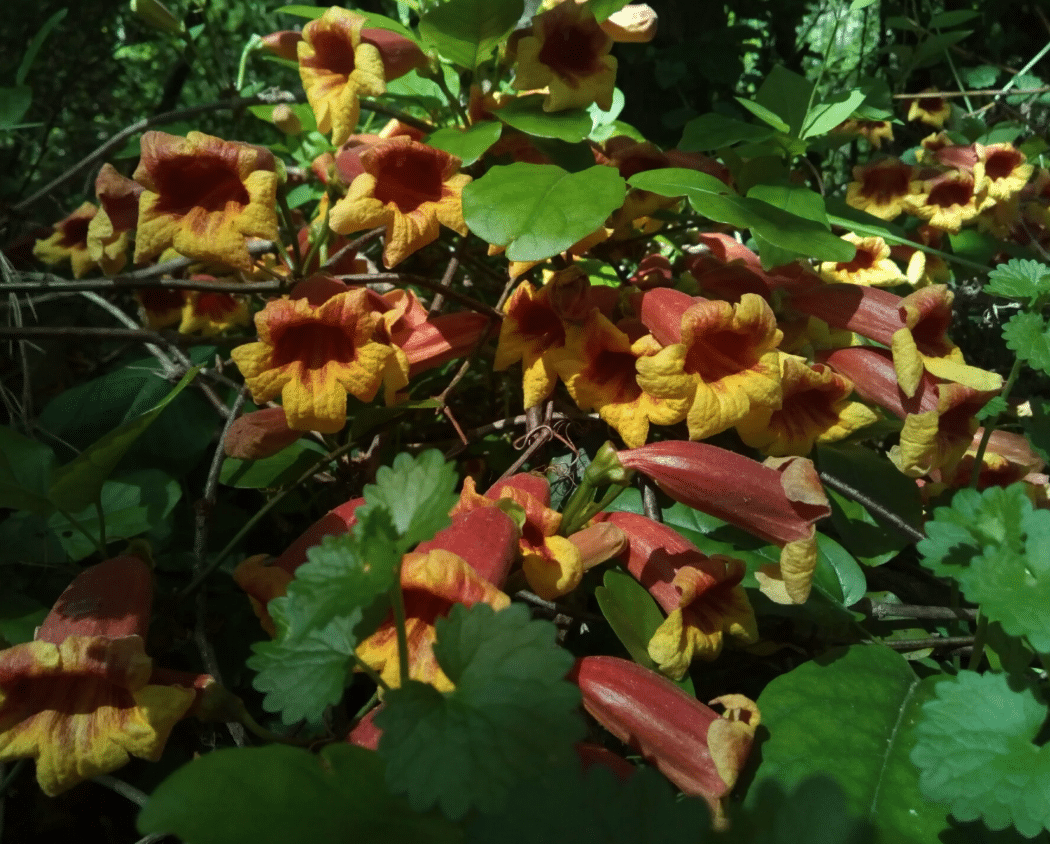
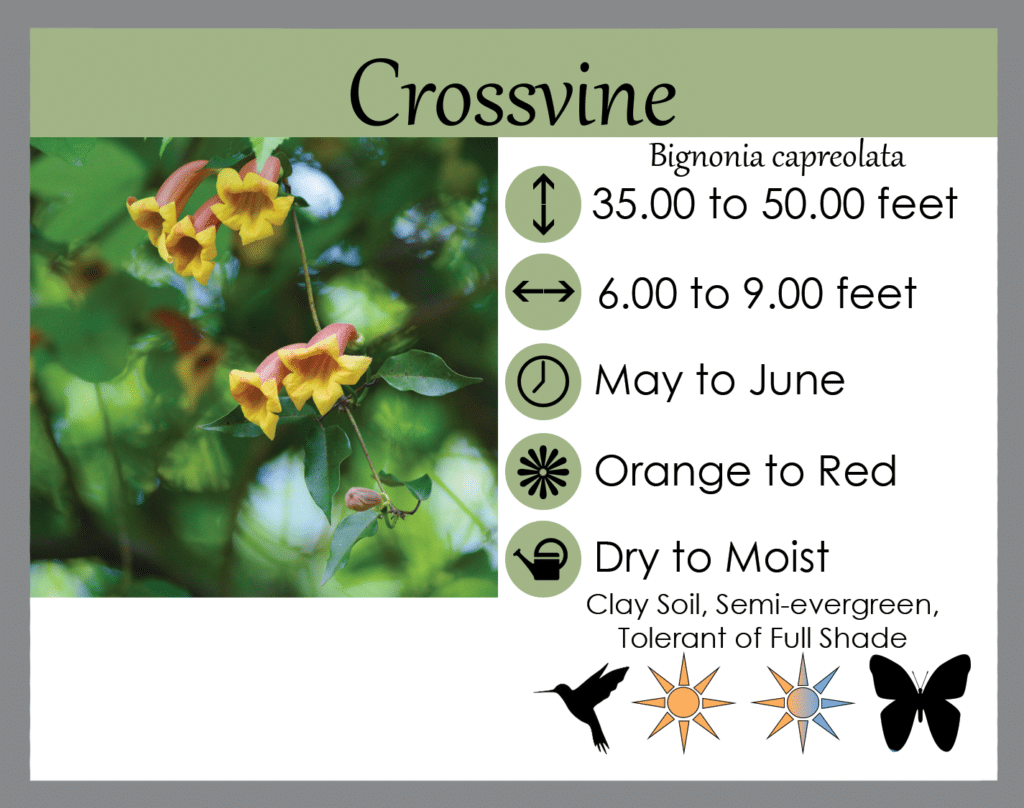
Crossvine thrives in rich, well-drained soils. It grows and blooms best in full sun but tolerates some shade. These vines can grow up to 50′ feet tall, often clinging to trees by twining tendrils around the tree’s trunk. The leaves are a dark, lustrous green, and may turn red or purple colder conditions. In addition, the foliage is evergreen, though in harsh winters the vine may die back to the ground before growing again from its roots in the Spring. The 2″ long trumpet shaped flowers appear in groups of two to five, and are hues of bright red, orange, and yellow. In Maryland, they bloom from May to June.
Bignonia capreolata is one of Maryland’s showiest native flowers. Not only are they are a great addition to pollinator gardens, but also grow well on large trellises, arbors, or along fences and walls. However, gardeners be warned: Crossvine has a high flammability rating, so take care if you choose to plant them close to your home. Also, because of their aggressive growing habit, you may need to prune them to maintain your desired size. You can easily cut back plants that have grown too large immediately after the plant has finished blooming.
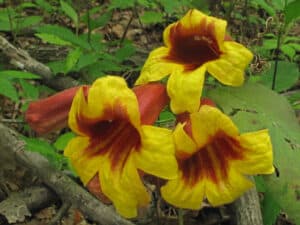
Crossvine in Bloom

Crossvine scaling up a tree
Wildlife Benefits
Crossvine is an excellent source of nectar for butterflies, and is especially good at attracting hummingbirds. Deer browse the foliage, and even beavers have been known to eat the leaves. Bignonia capreolata is also a host plant for a number of moths and butterflies, including the Rustic Sphinx Moth (Manduca rustica) and Gray Hairstreak Butterfly (Strymon melinus).
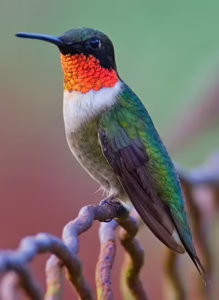
Crossvine is often visited by Ruby Throated Hummingbirds
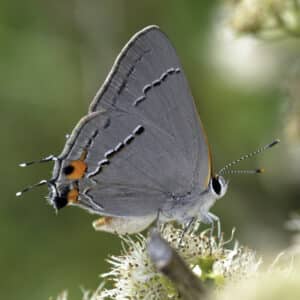
Crossvine is a larval hostplant to the Gray Hairstreak Butterfly
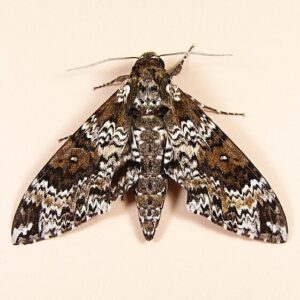
Rustic Sphinx Moth
Fun Facts
Crossvine’s generic name, Bignonia, is named after Jean-Paul Bignon, a French writer, preacher, and the librarian to King Louis XIV. He was the first European translator of The Arabian Nights.
The shape of a cross is visible in the stem of Crossvine when it is cut, hence its common name.
Some say that the blooms of Bignonia have a chocolatey-mocha scent to them.
***
Shop Bignonia capreolata at LGS!
***
Plant Information
~~~~
Common Name: crossvine
Type: Vine
Family: Bignoniaceae
Height: 35.00 to 50.00 feet
Spread: 6.00 to 9.00 feet
Bloom Time: May to June
Bloom Description: Orange-red
Sun: Full sun to part shade
Water: Dry to Moist
Maintenance: Medium
Flower: Showy, Fragrant
Attracts: Hummingbirds
Tolerate: Heavy Shade
Information from: NC State Extension, Lady Bird Johnson Wildflower Center, Missouri Botanical Garden, and Piedmont Master Gardeners
~~~~