
Maryland Native Plants
Thuja occidentalis – Northern White Cedar
Cultivars for Landscaping
Planting and Growing
Thuja occidentalis, also called Northern white cedar or Arborvitae, is a woody, needled evergreen shrub in the cypress family (Cupressaceae). It is native to eastern and central Canada and the eastern and north-central portions of the United States. This plant is easily grown in average, moist, well-drained soils and thrives in full sun, though they appreciate some light afternoon shade in hot summer climates. American arborvitae is a low-maintenance plant that tolerates clay soil, wet sites, black walnut, and air pollution. It does not tolerate dry or exposed, windy sites; the foliage can become winter-burned (yellow-brown). It grows well in full sun or partial shade, but in full shade, the foliage will thin out dramatically. A distinctive feature of this tree is its dominant trunk. The bark is grayish-brown to reddish-brown with shallow furrows. Small oblong cones appear in the spring, mature to a brown color in the summer, and may persist through the winter.
Cultivars
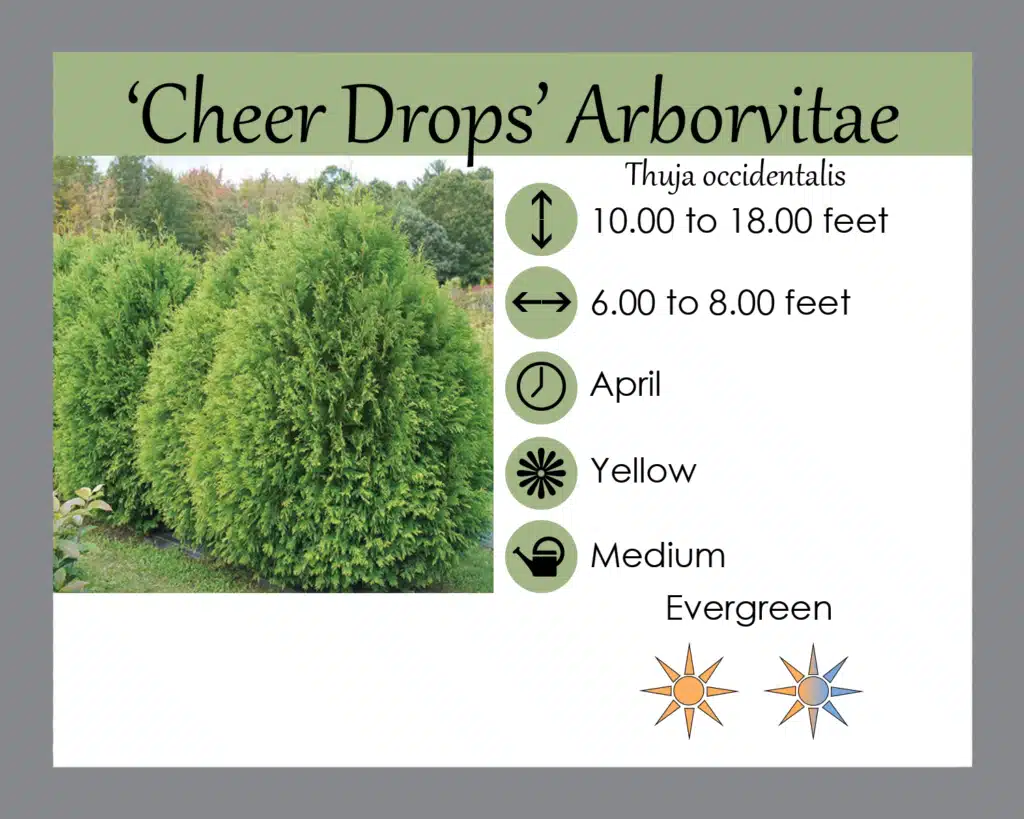
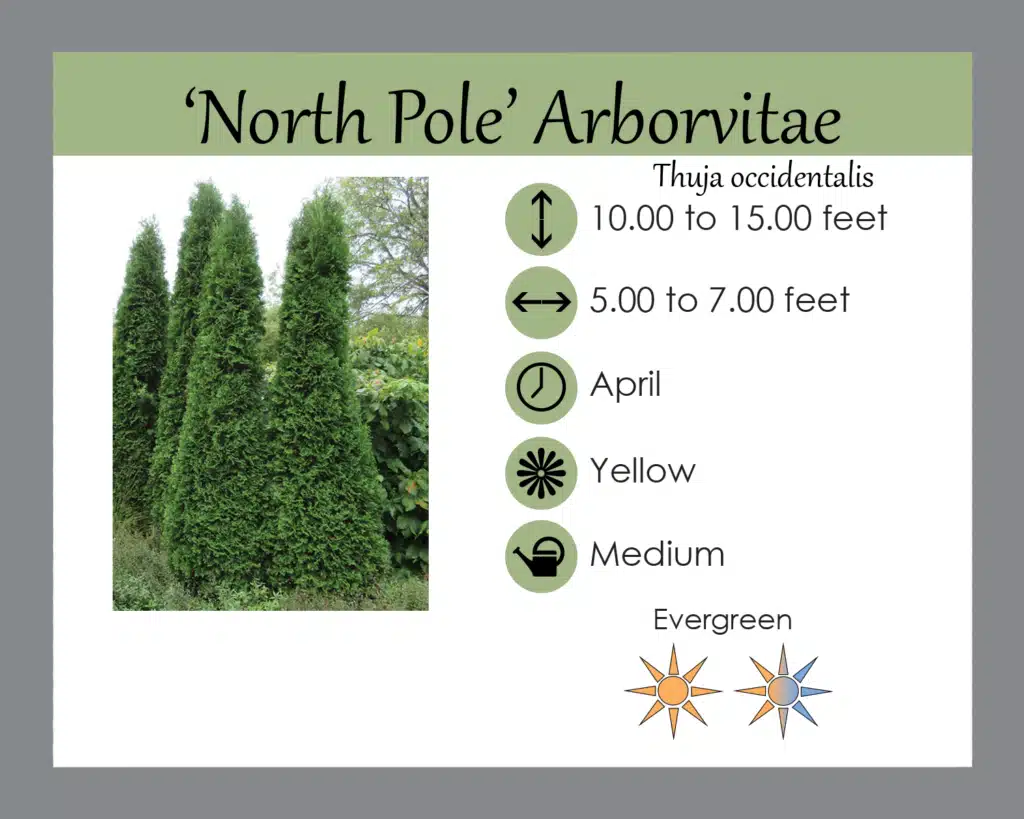
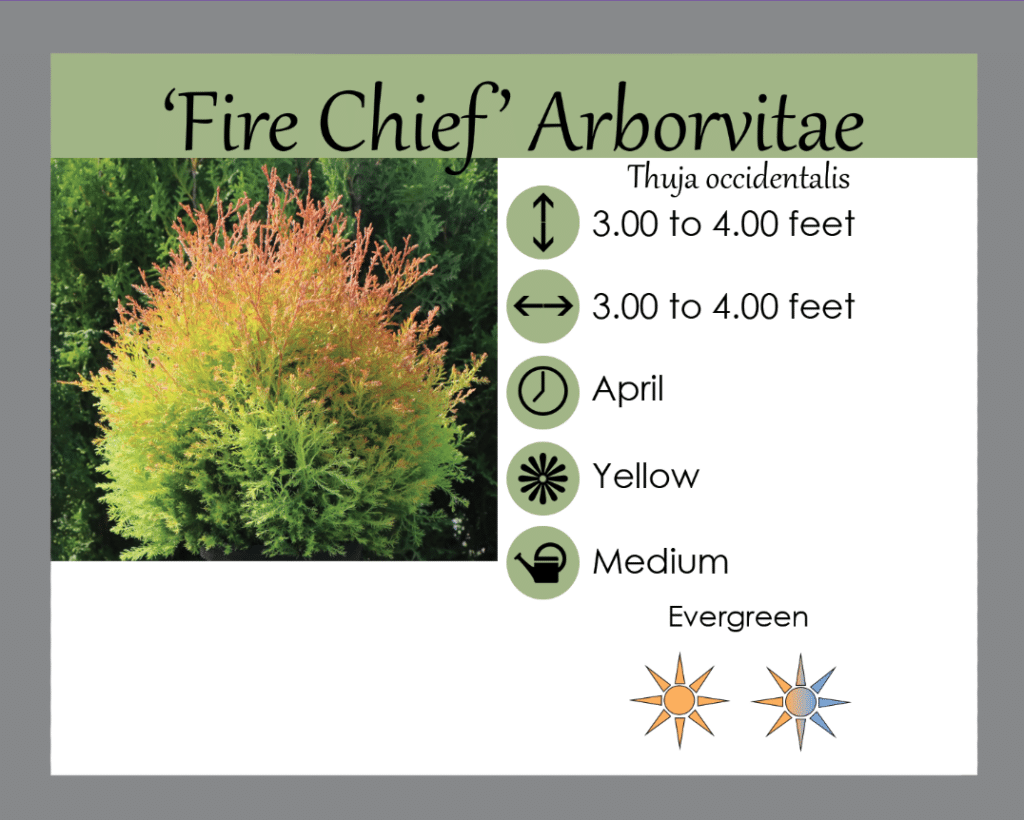
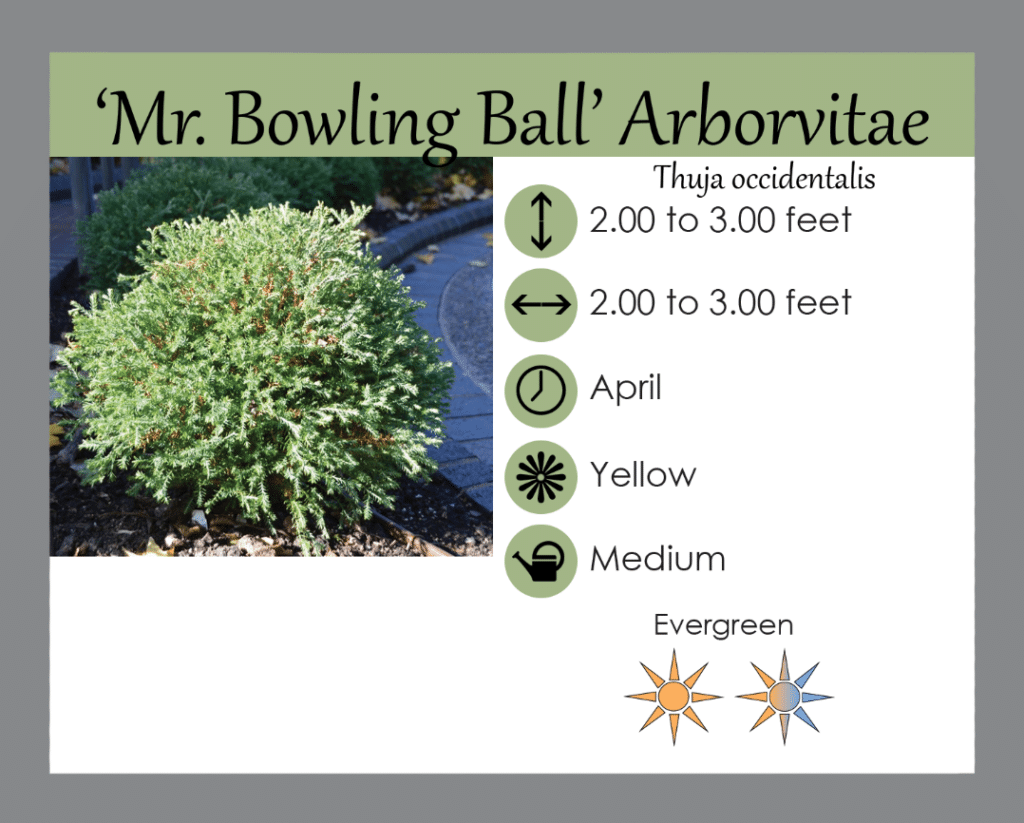
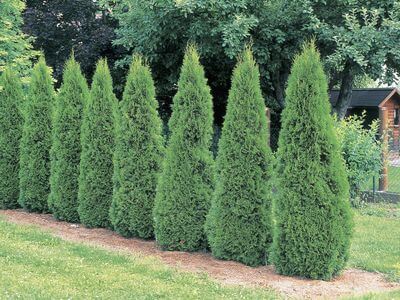
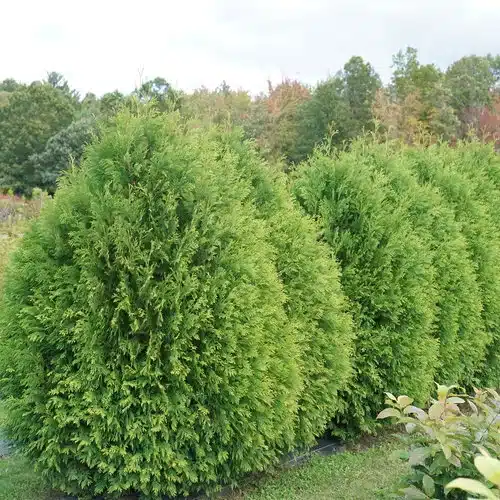
Cultivars are typically globular, pyramidal, columnar, or conical in growth form. They still provide benefits to wildlife and add predictable structure and texture to the garden. Use cultivars of this species to make an exclamation point in garden designs or as as a privacy hedge. Little to no pruning is required. If you do wish to prune, do so in late spring/early summer, after the new growth has emerged. Avoid cutting into any very thick stems unless you are removing them entirely, as this can leave an unsightly hole in the plant, and recovery from such cuts is typically slow.
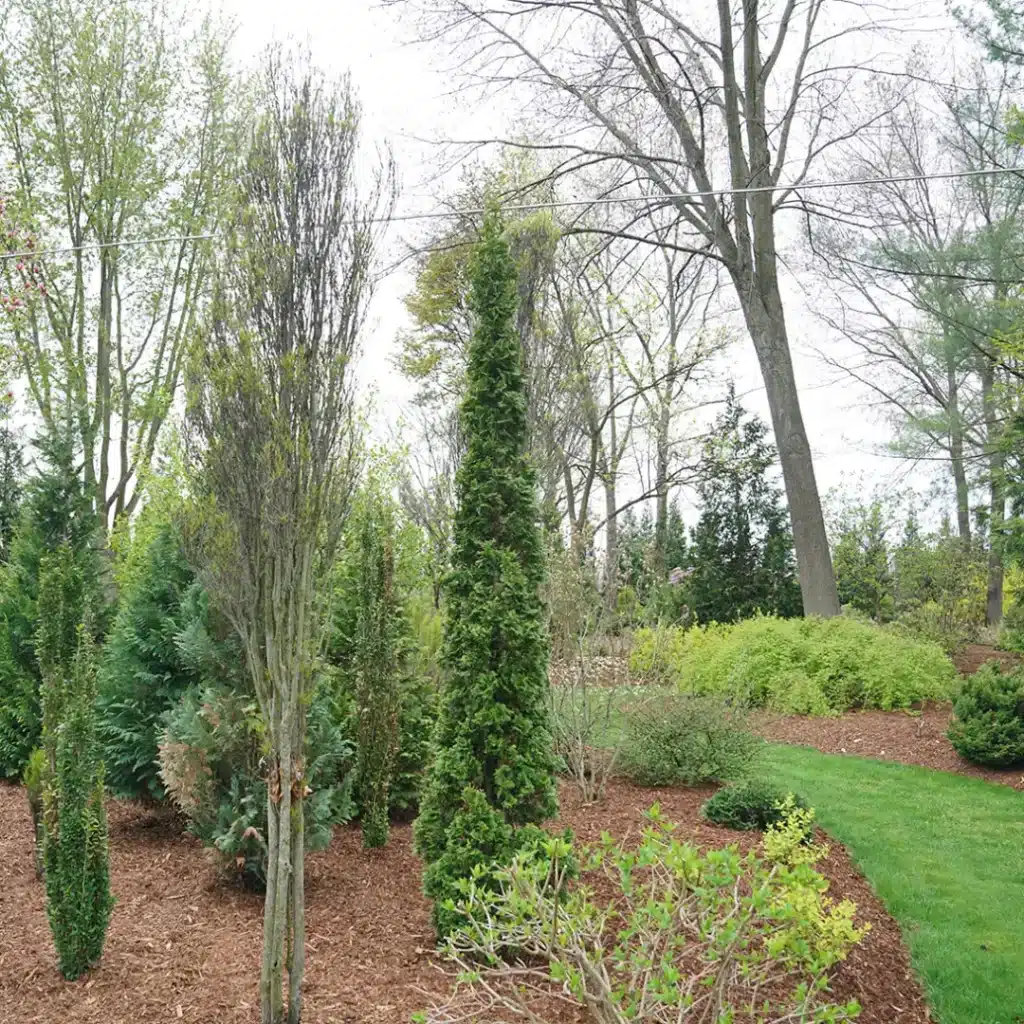
Arborvitae ‘Sting’
Wildlife Benefits
Its dense foliage offers excellent thermal cover in the hot summer months, while in the winter the evergreen foliage helps insulate non migratory birds from harsh winter winds. Many avian species like to nest in the dense foliage as it provides excellent coverage from predators. The seeds are also eaten by many as they are rich in nutrients. Pine siskins and American goldfinches are particularly adept at extracting seeds from the cones. Other species that are often seen snacking on these seeds are titmice, nuthatches, and grosbeaks.
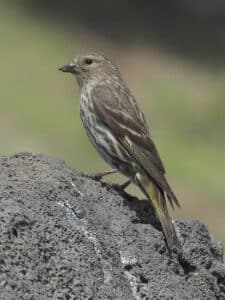
The pine siskin (Spinus pinus) eats arborvitae seeds over winter
Fun Facts
Though commonly called “white cedar” in North America, the genus Thuja is actually part of the cypress family. There are no true cedars native to the United States.
Arborvitaes are classified as a shrub due to its low branching at the base. However, its height ranges from 1 foot to over 50 feet tall
***
***
Plant Information
Common Name: American arborvitae
Type: Needled evergreen
Family: Cupressaceae
Bloom Time: Non-flowering
Bloom Description: Non-flowering
Sun: Full sun to part shade
Water: Medium
Maintenance: Low
Leaf: Evergreen
Other: Winter Interest
Tolerate: Clay Soil, Black Walnut, Air Pollution