
Maryland Native Plants: Euphorbia corollata – Flowering Spurge
Maryland Native Plants
Euphorbia corollata – Flowering Spurge
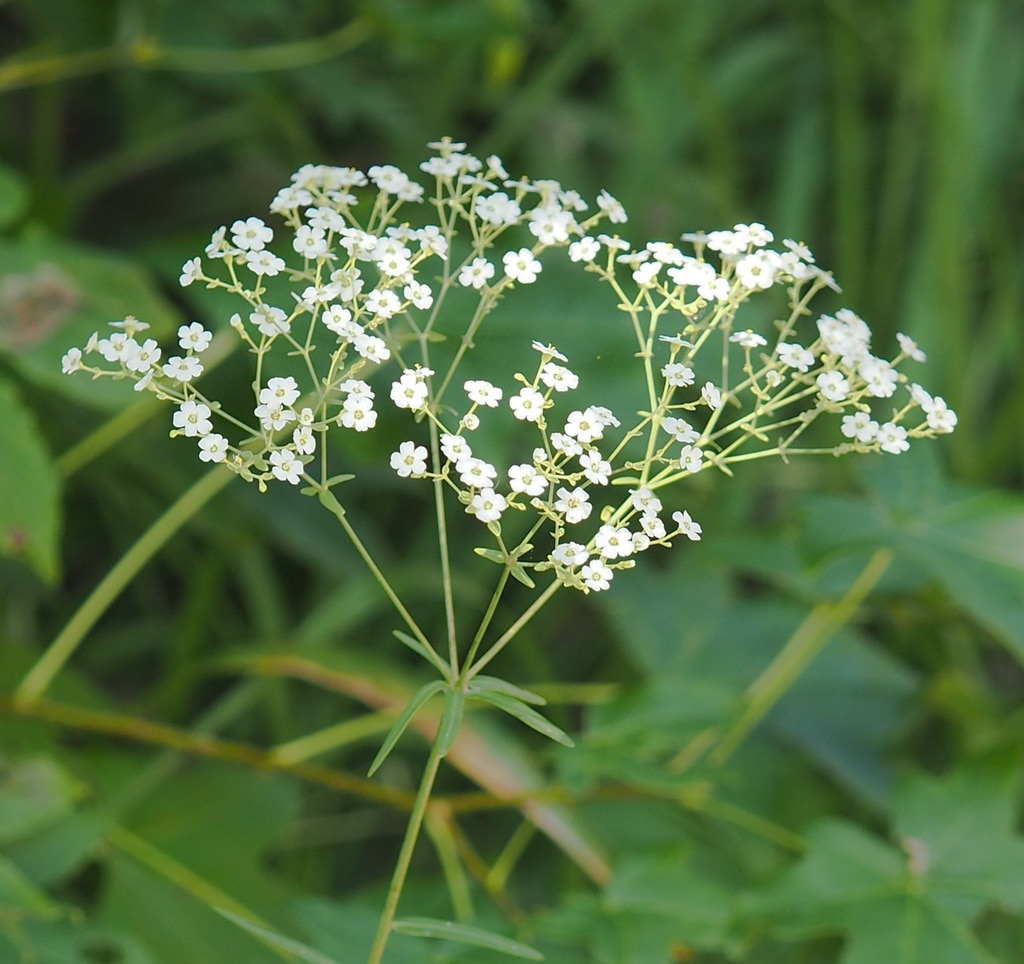
Habit
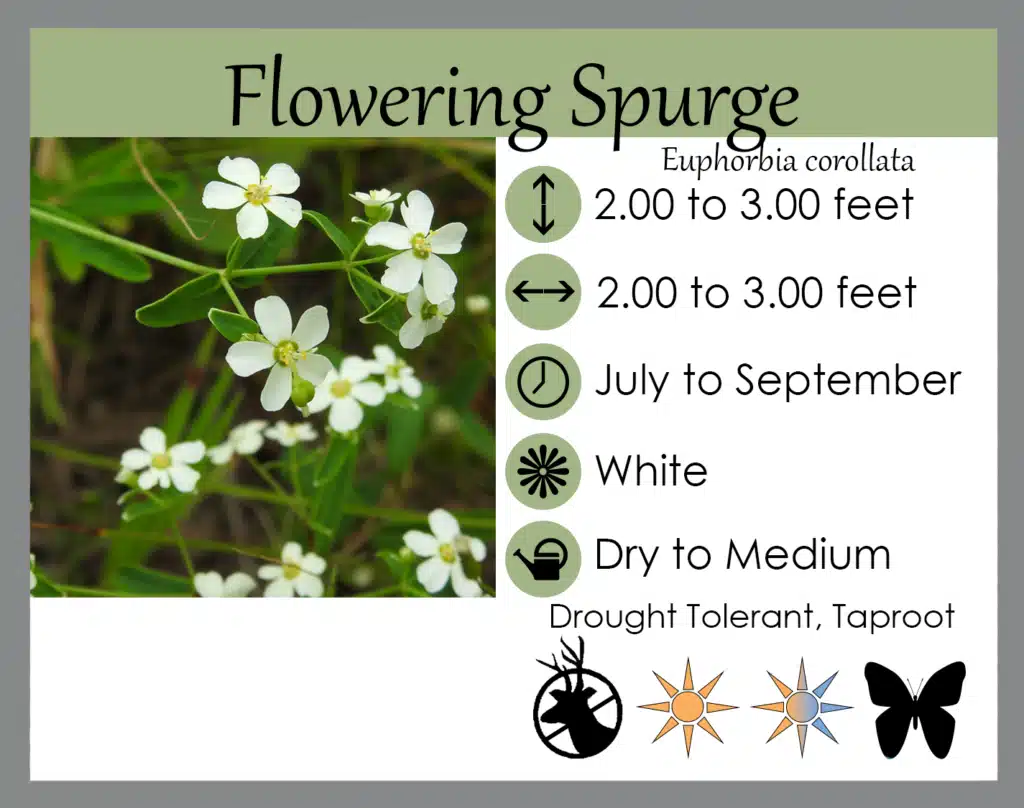
Flowering spurge (Euphorbia corollata) is a clump-forming perennial that grows with an upright habit. It produces tiny white flowers in late summer through early fall and grows up to 2-3 feet tall.
Planting and Growing
Flowering spurge prefers full to partial sun and dry conditions. This hardy species tolerates almost any kind of soil, including loam, clay, sand, gravel, or rocky material as long as they are well-drained. Thriving in poor soil is an advantage for this plant because it reduces competition. It tends not to perform well in areas with rich soils and high competition. Once established, it is tolerant of drought as well as rocky, sandy and/or clay soils.
It may be propagated by division, root cuttings, or seeds.
Ecosystem Impacts
Many types of birds eat the seeds of Flowering Spurge, including bobwhite, quail, wild turkey, Horned Lark, and mourning doves. The pollen and nectar of the flowers attract a wide variety of native pollinators including Halictid bees, small butterflies, the endangered Karner Blue (Lycaeides melissa samulelis); and more. Other insects feed on the sap, foliage, and other parts of Flowering Spurge. Flowering Spurge is rarely eaten by mammalian herbivores because of the toxic white latex in its foliage.
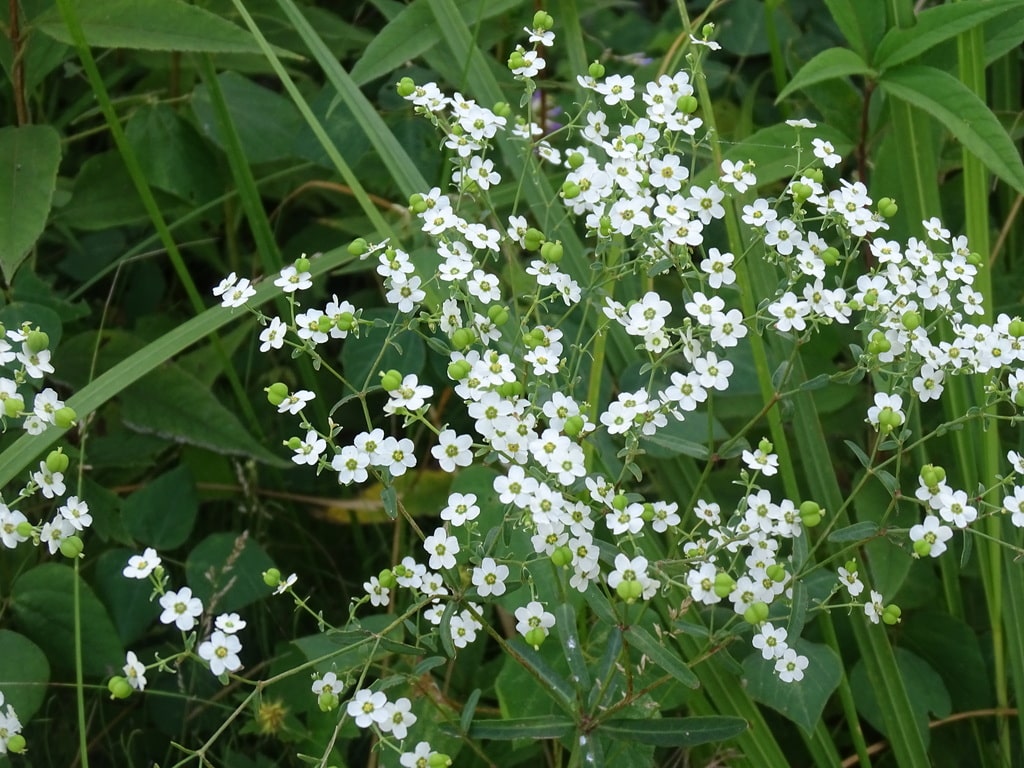
Euphorbia corollata
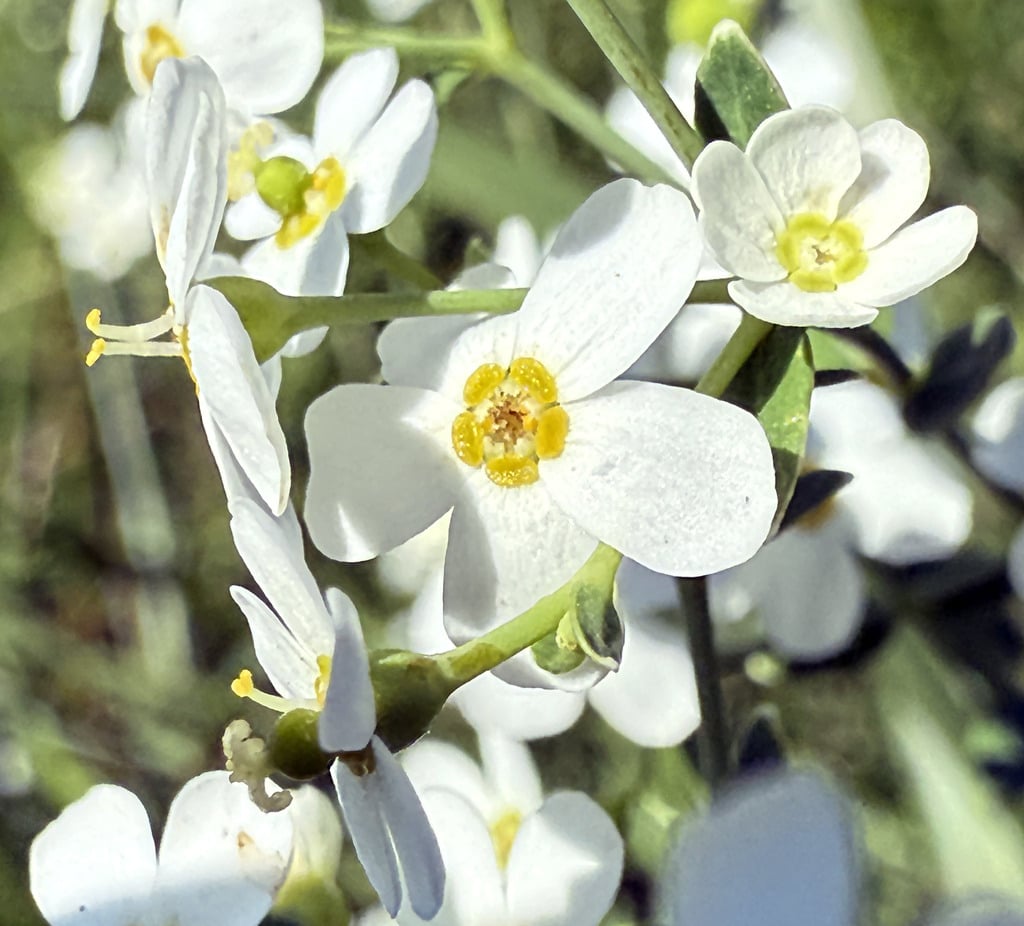
Euphorbia corollata Flower
Plant Information
Common Name: flowering spurge
Type: Herbaceous perennial
Family: Euphorbiaceae
Height: 0.50 to 3.00 feet
Spread: 1.50 to 2.00 feet
Root System: Taproot
Bloom Time: June to September
Bloom Description: White
Sun: Full sun to part shade
Water: Dry to medium
Maintenance: Low
Flower: Showy, Good Cut
Attracts: Birds, Butterflies
Tolerate: Rabbit, Deer, Drought, Clay Soil, Dry Soil, Shallow-Rocky Soil
Information from Illinois Wildflowers and North Carolina Extension
***
***
~~~~