
Pollinator Powerhouses: Solidago
Pollinator Powerhouses: Solidago
This blog is updated to include information from Mt. Cuba’s Solidago Trial!
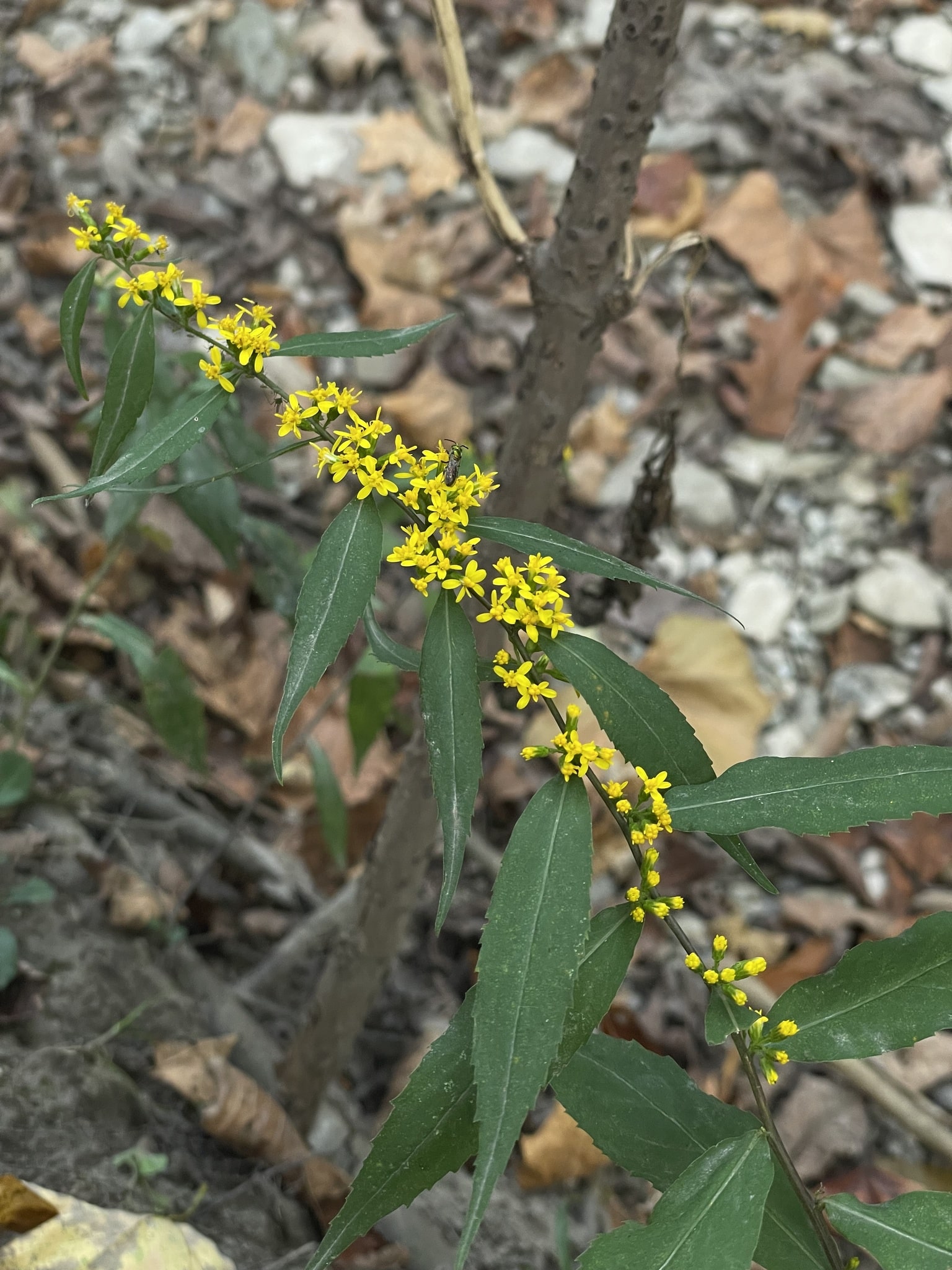
We carry many different species of Goldenrods or Solidago, as there are species for every space including full sun to shade, dry to wet soils! Goldenrods are keystone species in Maryland. Over 100 lepidoptera use Goldenrods for host plants and over 40 specialist bee species use their pollen! Goldenrods also feed many generalist pollinators as well. Check out our inventory to see more Goldenrod species our Native Plant Nursery carries here. Below are a couple of Mt. Cuba’s top performers and favorites that we carry!
Mt. Cuba’s 2021-2023 Solidago Trial Top Performer
Solidago rugosa ‘Fireworks’
Rough or Wrinkle-leaf Goldenrod

The top performing Goldenrod in Mt. Cuba’s trial was Solidago rugosa ‘Fireworks’. Found in a wet coastal plain habitat in North Carolina, these species grows well in average to wet soils in full sun to part shade. A great clump former, this species has done well in my full-sun front yard in heavy clay! It turns into a showstopping display of blooms in Fall, with lots of little pollinators visiting. – Cianna
Latin Name: Solidago rugosa ‘Fireworks’
Common Name: Rough or Wrinkle-leaf Goldenrod
Type: Herbaceous perennial
Family: Asteraceae
Height: 3.00 to 4.00 feet
Spread: 2.00 to 3.00 feet
Bloom Time: September to October
Bloom Description: Yellow
Sun: Full sun
Water: Medium to wet
Maintenance: Low
Suggested Use: Rain Garden
Flower: Showy
Attracts: Butterflies
Tolerate: Deer, Clay Soil, Wet Soil
Click here to learn more about Solidago ‘Fireworks’ from our online shop
Solidago juncea
Early Goldenrod
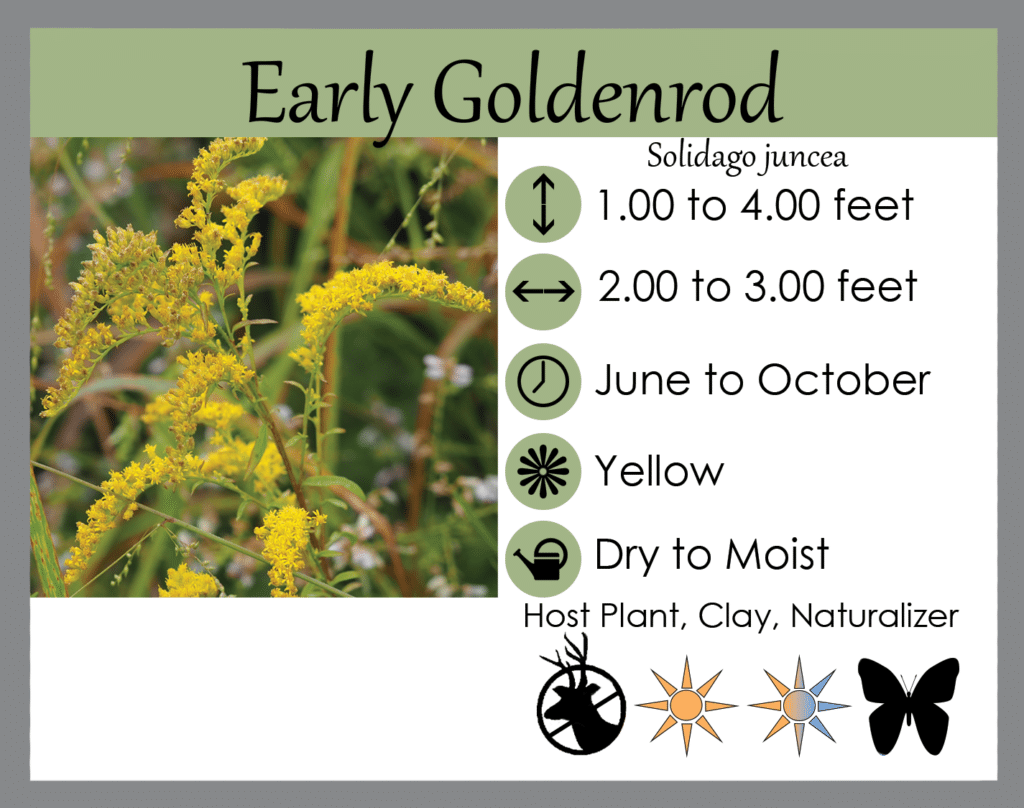
Solidago juncea or Early Goldenrod blooms earlier than most Goldenrods in Maryland, but will continue into late fall! It did well in Mt. Cuba’s trial garden, but can be floppy if placed in too nutrient rich soil. If you cut it back in early Summer, that should help!
Common Name: Early Goldenrod
Type: Herbaceous perennial
Family: Asteraceae
Height: 1.00 to 4.00 feet
Spread: 2.00 to 3.00 feet
Root: Rhizomes – will clump, but not for small gardens
Bloom Time: June to October
Bloom Description: Yellow
Sun: Full Sun to Part Shade
Water: Dry to Moist
Maintenance: You can divide the clumps if they get too large.
Suggested Use: Meadow, larger gardens
Flower: Showy
Attracts: Long-tongued and short-tongued bees, wasps, flies, butterflies, moths, and beetles
Tolerate: Clay and rocky soils, deer and drought resistant
Host Plant: 122 species of Lepidoptera
Click here to learn more about Solidago juncea from our online shop
Solidago caesia
Blue-stemmed Goldenrod
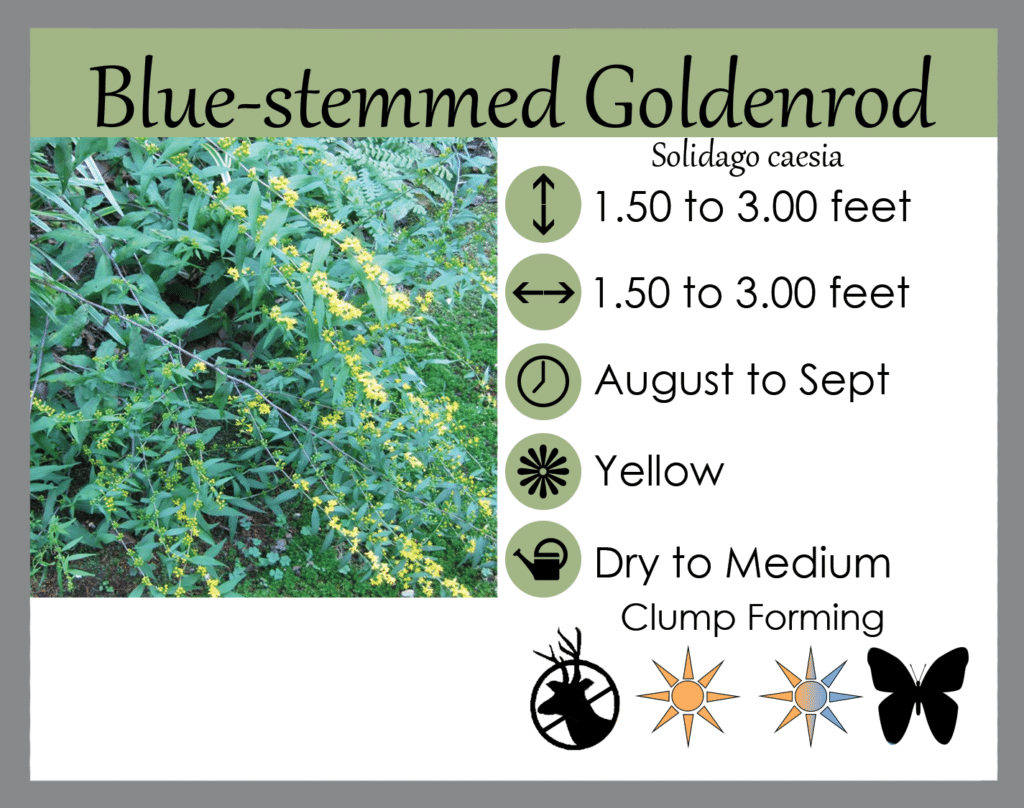
Solidago caesia, Blue-Stemmed Goldenrod is a perennial with blueish stems, medium green leaves, and tiny, daisy-like yellow flowers that grow in loose clusters. The bright yellow flowers attract lots of butterflies and bees. Solidago caesia is easily grown in dry to medium, well-drained soils and in full sun to part shade. In full sun Blue-stemmed Goldenrod needs more moisture. This species of goldenrod does not spread as aggressively as some other goldenrod species.
It did not do as well in Mt. Cuba’s trial garden due to being in full sun and uneven moisture. In partial to dappled shade, this species is stunning in fall! – CR
Latin Name: Solidago caesia
Common Name: Blue-Stemmed Goldenrod
Type: Herbaceous perennial
Native Range: Central and Eastern North America
Height: 1.50 to 3.00 feet
Spread: 1.50 to 3.00 feet
Bloom Time: August to September
Bloom Description: Yellow
Sun: Full Sun to Part Shade
Water: Dry to Medium
Maintenance: Low
Flower: Showy
Attracts: Butterflies
Tolerate: Deer, Drought, Clay Soil
Click Here to Get a Quote for Blue-Stemmed Goldenrod from Our Online Shop