Ilex opaca – American Holly: Maryland Native Plants for Winter
Maryland Native Plants
Ilex opaca – American Holly
Planting and Growing
Ilex opaca, commonly called American Holly, is an evergreen tree with an upright, pyramidal growth habit. In the wild, it is found as an understory tree scattered throughout moist, deciduous forests. In Maryland, it is most commonly found in the Chesapeake Bay region of the Eastern and Western shores, and is less common in the Piedmont and Mountainous regions.
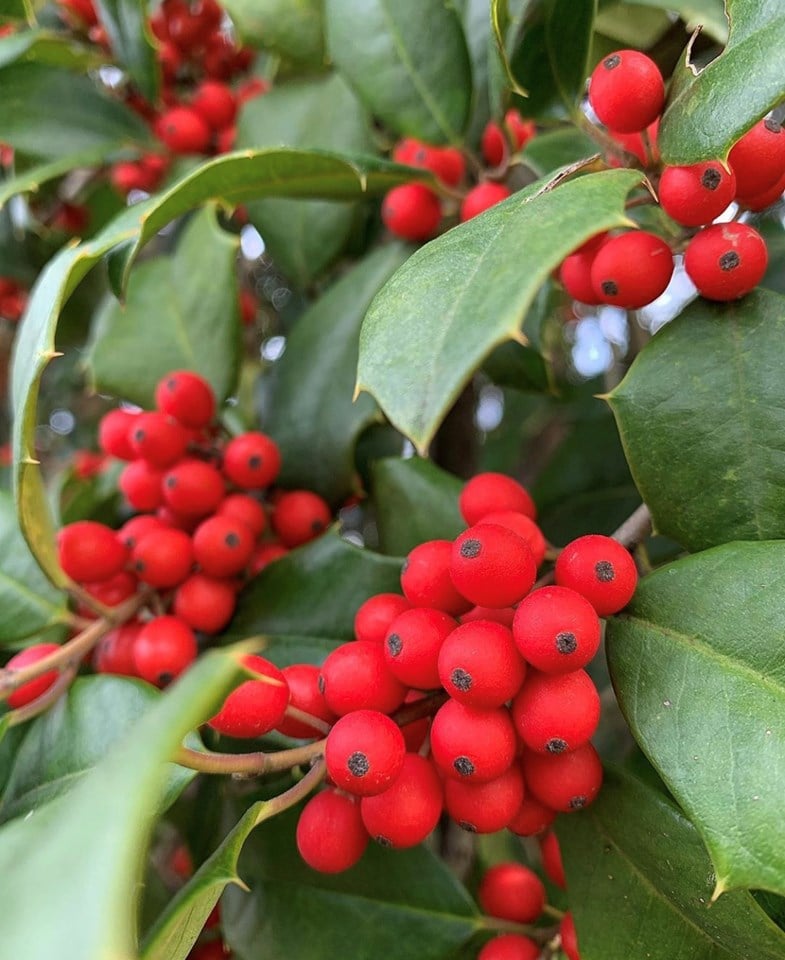
American Holly is a slow grower, typically growing only 6″-12″ inches a year. It is considered the hardiest broadleaf evergreen in the United States, and tolerates a variety of soil conditions making it a good choice for many landscapes. The American Holly is dioecious, meaning plants are either male or female, and at least one of each sex is necessary for fruiting. It’s prickly leaves are thick, waxy, and dark green. Its springtime blossoms are greenish-white; male flowers form in clusters and females are solitary. The most noteworthy characteristic is its beautiful, bright red berries present throughout winter, making it a popular holiday choice for decorative greens.
American Hollies grow best in full sun but tolerate part shade. In shadier conditions foliage often becomes sparse. Grow them in acidic, moist, well-drained soils. Avoid waterlogged and saturated soils. These trees make great screens and barriers, but are most beautiful when given ample space to grow and planted as specimen trees. As mentioned, the red berries and rich green leaves make excellent decor, and are often used in holiday wreath making. But be warned: the spines on the leaves are sharp, so be sure to wear thick gloves to protect yourself when handling them!
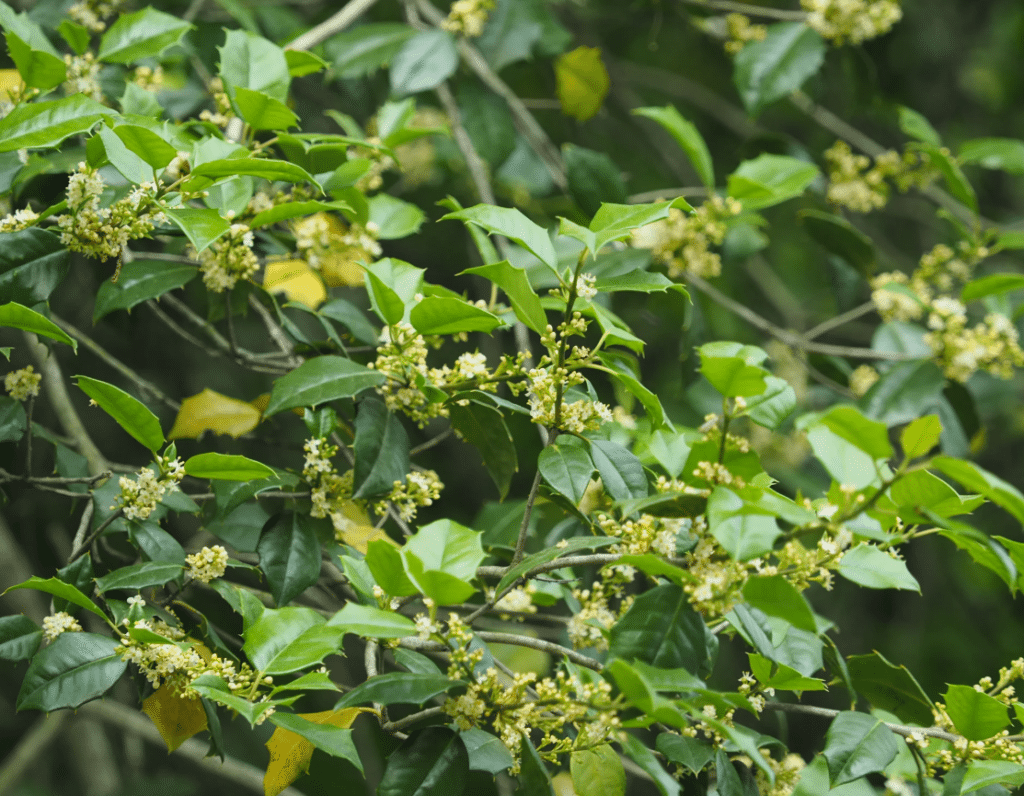
American Holly in with blossoms.
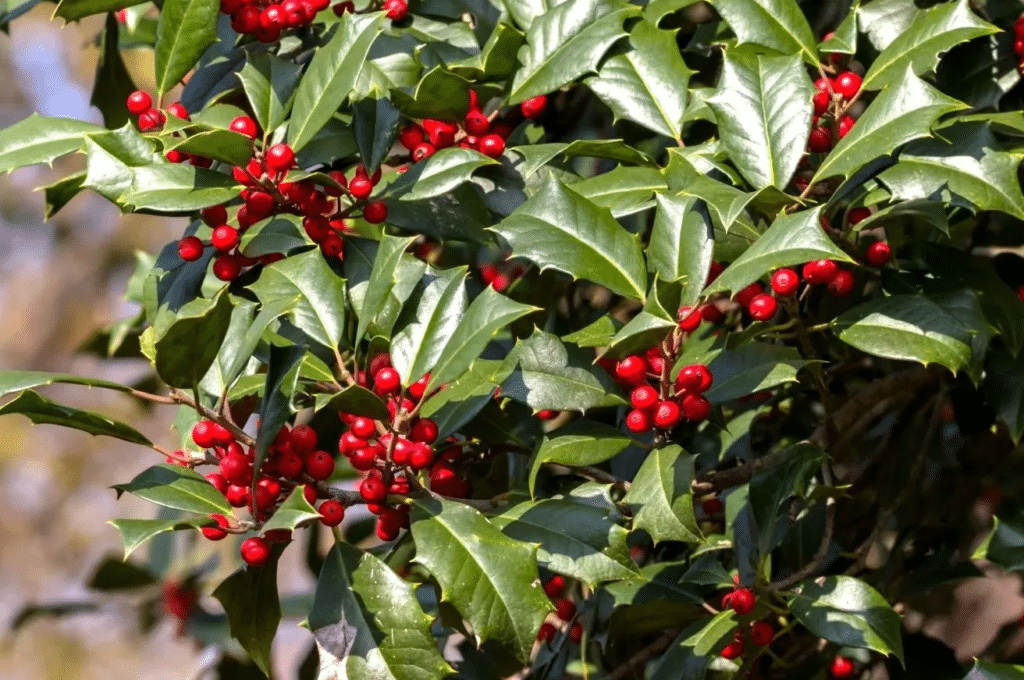
American Holly decked with berries.
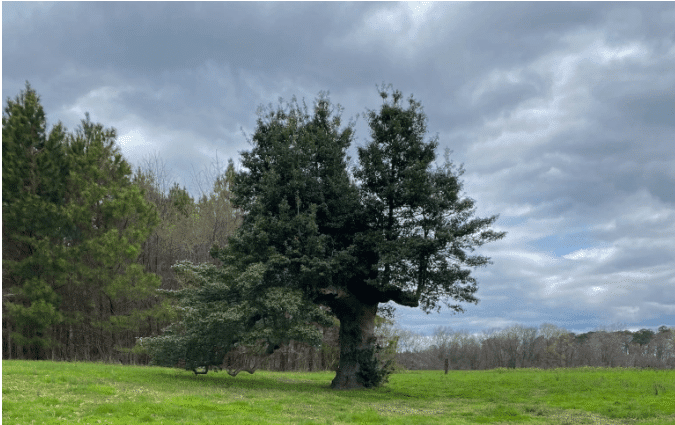
This stunning American Holly is around 300 years old. It grows on Wye Island NRMA on Maryland’s Eastern Shore.
Wildlife Benefits
The spiney leaves of American Holly act as a defense against browsing, and as such these trees are considered deer resistant. However, deer and squirrel are known to eat the berries in winter. The berries are also a crucial food source for wintering birds such as Cedar Waxwing, Bluebirds, Robins, Hermit Thrush, and many others. In addition to food, Ilex opaca offers great winter cover for birds and small mammals.
Many species of moth and butterfly use American Holly as a host plant, such as the Henry’s Elfin butterfly. Also, the flowers attract a great number of pollinators in Spring. Walk by a large Holly specimen or thick hedge in Springtime and you’ll hear the droning buzz of hundreds of hardworking bees and wasps.
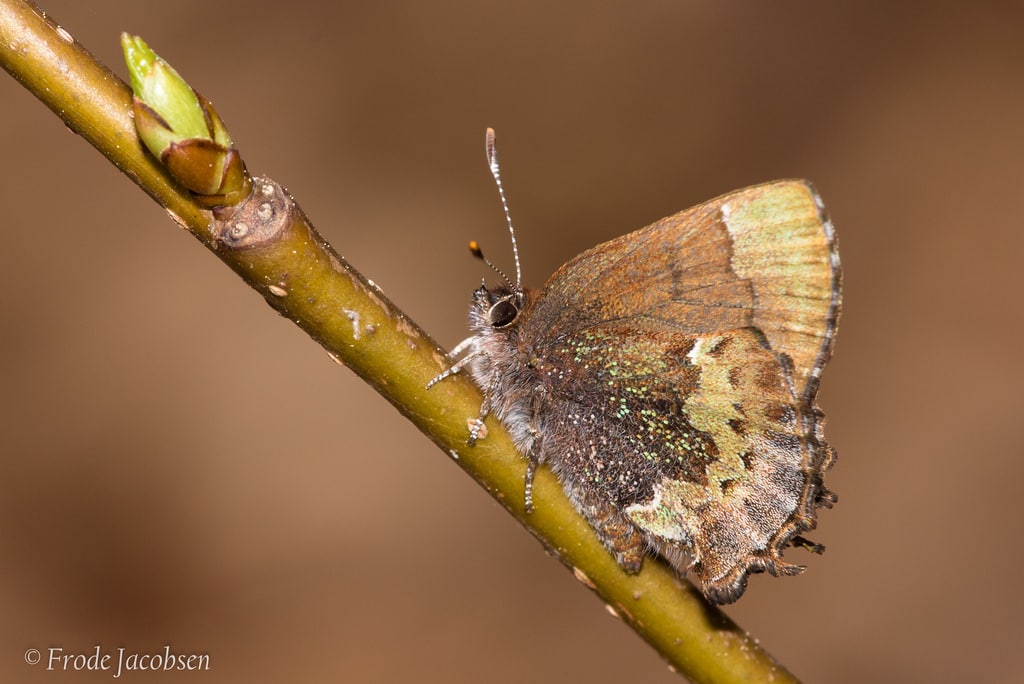
Henry’s Elfin Butterfly uses American Hollies as a host plant.
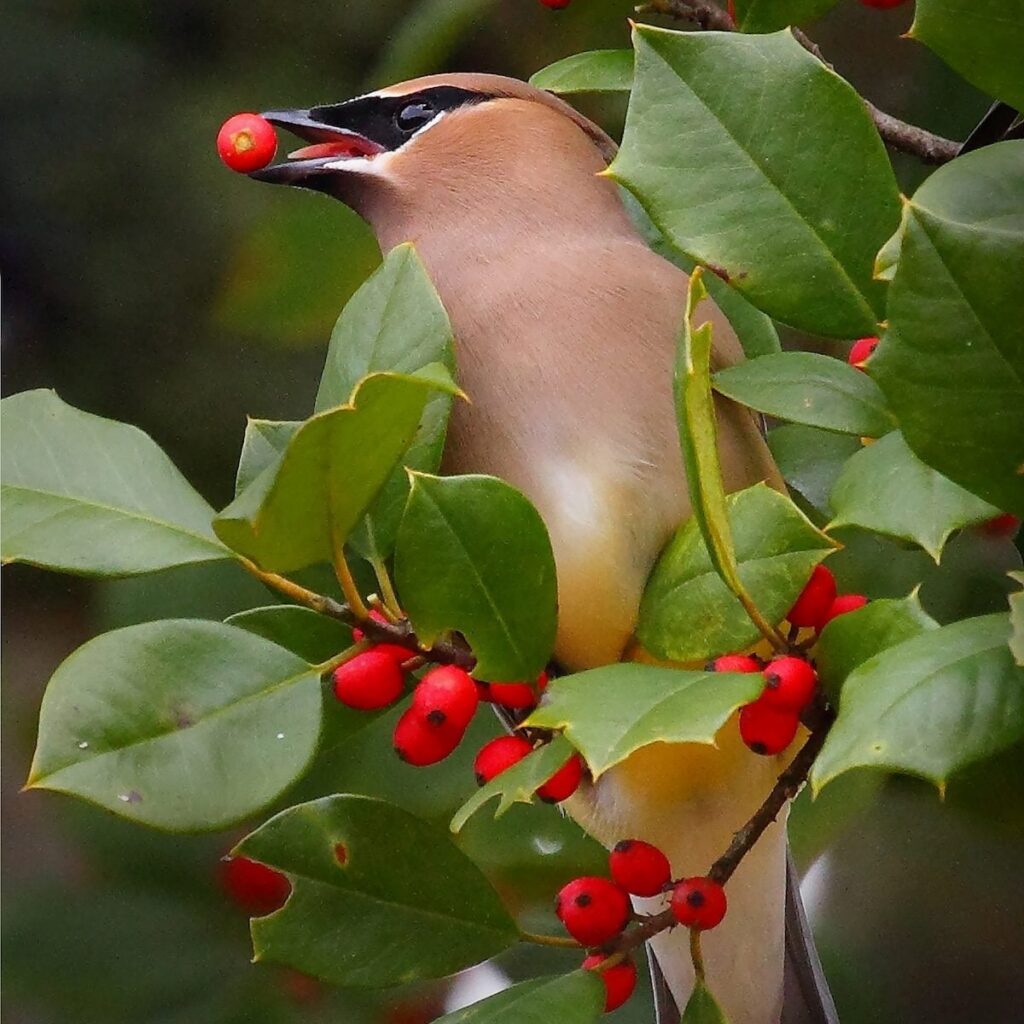
A Cedar Waxwing eating American Holly berries.
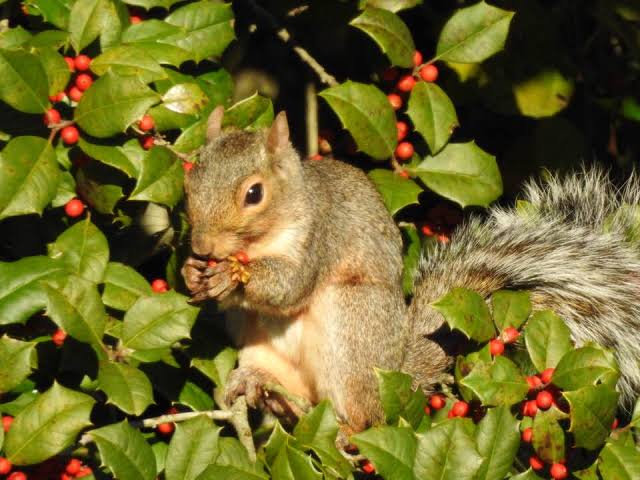
A Gray Squirrel feasting on American Holly berries.
Notable Cultivars
‘Maryland Dwarf’ is a low-growing, far-spreading cultivar that reaches 3′ in height and up to 10′ in spread. This is a female cultivar, so male plants are still required to produce berries. ‘Maryland Dwarf’ makes an excellent groundcover and, if desired, is easily pruned to keep its spread under control. Read our ‘Maryland Dwarf’ blog here to learn more about them!
Fun Facts
As noted, the thorny leaves are a natural deterrent against browsing. However, as the trees mature, fresh leaves on older limbs or out of reach from predators may actually grow without spines. This helps to conserve energy, and makes for more efficient photosynthesis.
The specific name opaca is Latin and means “opaque,” “shaded,” or “dull,” referring to the leathery, but non-glossy leaves.
One of the oldest American Holly specimens in Maryland is found on the Wye Island NRMA on Maryland’s Eastern Shore. This monstrous Holly is at least 300 years old, with a circumference at breast height of 11′!
***
***
Plant Information
~~~~
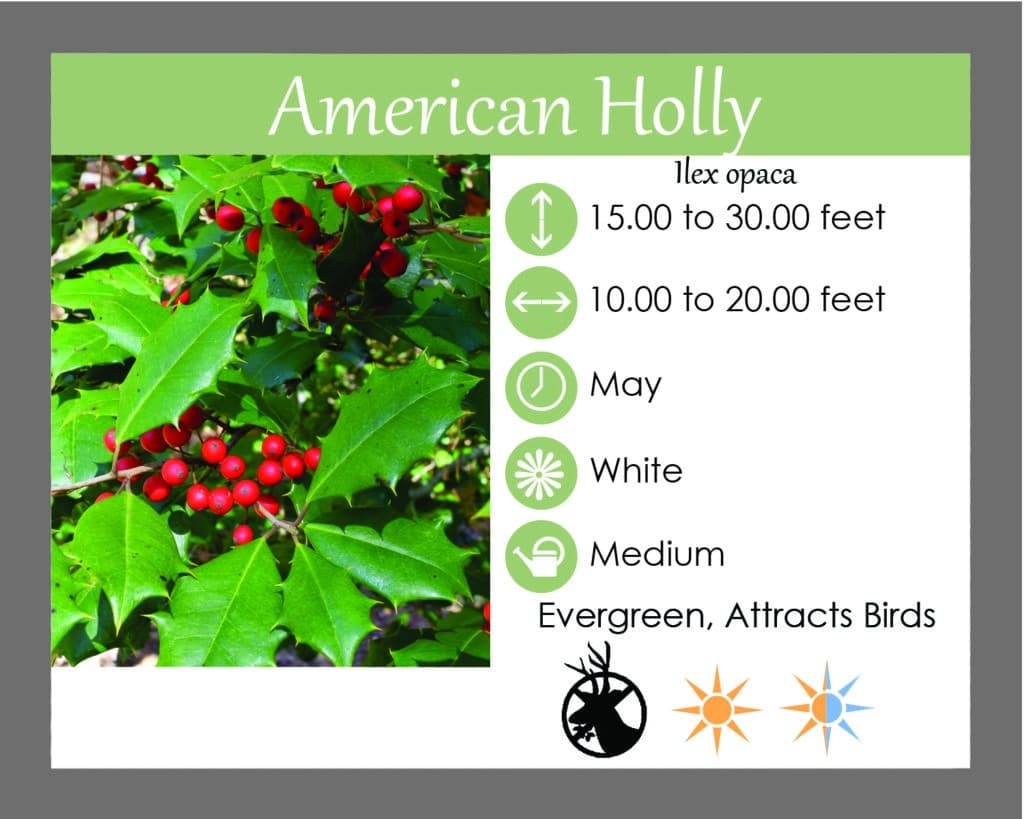
Latin Name: Ilex opaca
Common Name: American Holly
Type: Broadleaf evergreen
Family: Aquifoliaceae
Native Range: Eastern and central United States
Zone: 5 to 9
Height: 15.00 to 30.00 feet
Spread: 10.00 to 20.00 feet
Bloom Time: May
Bloom Description: Creamy white
Sun: Full sun to part shade
Water: Medium
Maintenance: Low
Flower: Insignificant
Leaf: Evergreen
Attracts: Birds
Fruit: Showy
Other: Winter Interest, Thorns
Tolerate: Deer, Clay Soil, Air Pollution
***
Information From: NC State Extension, UMD State Extension, Missouri Botanical Garden, USDA Plant Fact Sheet, Virginia DWR.
***
Written by: Brennan Keifer, LGS Nursery Associate