
Ilex verticilata
Winterberry Holly
Growing Information
WInterberry Holly prefers full to part shade and moist, well draining soil. In heavier shade or drier soil conditions, the plant may show a decrease in berry production or abort that season’s fruit set. When planted in moist soil, Winterberries can help stabilize soil and reduce erosion.
Habit
This species is slow growing, with the straight species reaching heights and widths of up to 15 feet. Some cultivars are dwarf cultivars, with a projected maximum height and width of four to five feet. However, these cultivars have been known to “break habit” and approach the height of the straight species.
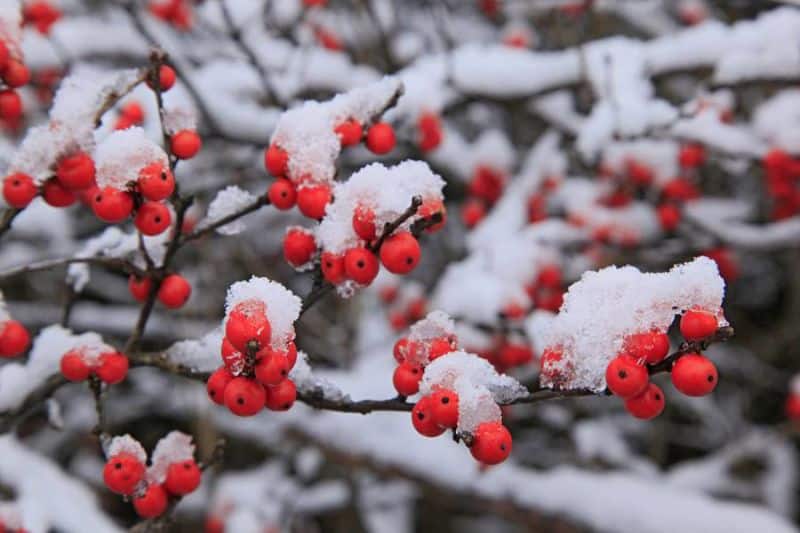
Ilex verticilata are one of our favorites for winter interest! They get their common name from the beautiful red (or gold depending on the cultivar) berries that they produce in the fall, bringing birds and beauty to your yard as the seasons begin to turn. These berries are technically toxic to humans, but will only cause mild discomfort at low doses. Importantly for those considering adding a Winterberry to their yard, these shrubs require cross-pollination from a shrub of the other sex in order to successfully produce these berries. Many cultivars require pairing with a specific other cultivar to help ensure that bloom times align. See below for list of pairings for the winterberry cultivars that LGS carried in 2025!
Meet Your Match!
Female Cultivar | Male Cultivar
Winter Red | Southern Gentleman
Magical Winter Jewel | Southern Gentleman
Red Sprite | Jim Dandy
Berry Heavy | Mr. Poppins or Jim Dandy
Berry Heavy Gold | Mr. Poppins or Jim Dandy
Berry Poppins | Mr. Poppins
Little Goblin | Little Goblin Guy
A few notes – you do still need to pair a male and a female together when planting the straight species. They will sometimes come from the growers with the sex identified, or they can be checked when they flower. Additionally, for most varietes of Winterberry, you will only need one male for every 5-10 female plants, so long as the female plants are within approximately 50 feet of the male.
Fast Facts
Although this plant is listed as ‘deer resistant’ I’ve definitely seen them get munched. If you protect your newly planted winterberries until they’re established, they’ll withstand any browsing a little better. Let us know in the notes if the deer have eaten your winterberry. I also like to use winterberry in soil that is moist.
This is a great plant on the border of a property where there is more space for it to grow without needing to be pruned back hard. I usually don’t prune it unless really needed – every three years or so.
Plant Information
Latin Name: Ilex verticilata
Common Name: Winterberry holly
Type: Deciduous shrub
Family: Aquifoliaceae
Zones: 3 to 9
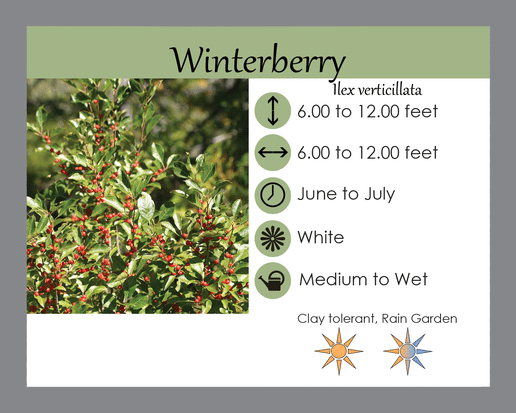
Height: 6.00 to 12.00 feet
Spread: 6.00 to 12.00 feet
Bloom Time: June to July
Bloom Description: White
Sun: Full sun to part shade
Water: Medium to wet
Maintenance: Low
Suggested Use: Hedge, Rain Garden
Flower: Insignificant
Attracts: Birds
Fruit: Showy
Other: Winter Interest
Tolerate: Deer, Erosion, Clay Soil, Wet Soil, Air Pollution