
Maryland Native Plants: Ageratina altissima – White Snakeroot
Maryland Native Plants
Ageratina altissima – White Snakeroot
Growing Information
White Snakeroot grows well in a variety of moisture and light conditions: it can tolerate medium to wet, well drained soils and full sun to part shade. While it does prefer part shade in moist, humusy soils, snakeroot can handle drier conditions in shady areas or full sun conditions in moist soils. In the wild, it can be found “along woodland edges, near sheltered waterways, and in recently disturbed, shaded sites” (Prairie Moon). Snakeroot spreads primarily by rhizomes and by self-seeding, resulting in clustered colonies that may take over following the initial disturbance of a site but then calm down once other plants begin to establish.
Habit
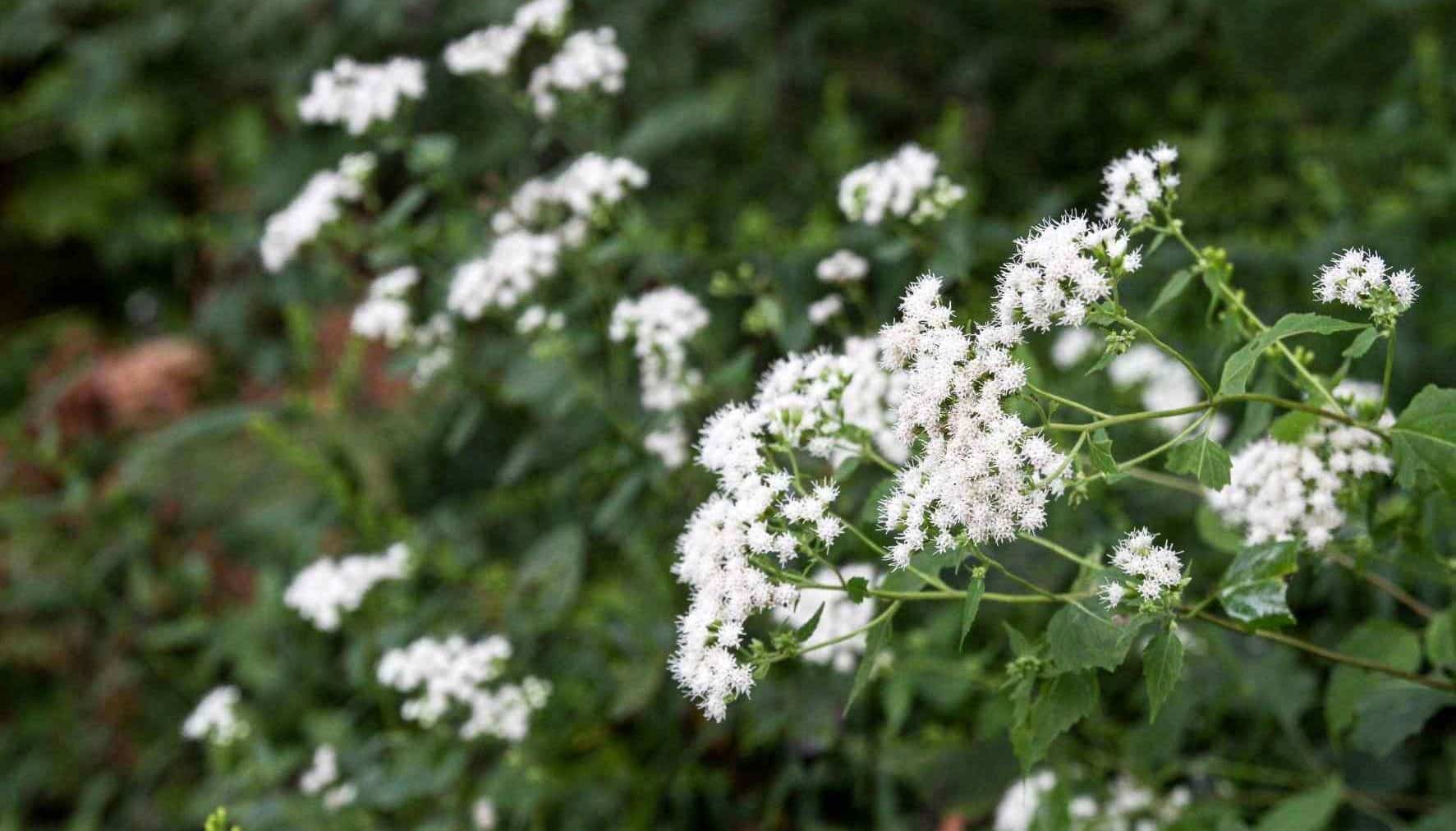
Ageratina altissima grows between 2 and 5 feet tall, with flowers comprised of many small blooms that give the plant an almost-fluffy appearance. The leaves are serrated and vaguely heart-shaped and tend to drape rather than stand erect.
When snakeroot goes to seed, its seedheads will “whimsically disperse… on the wind” (Prairie Moon) due to the dandelion-like structure of the flowers and seeds. This is, in part, what makes them such prolific self-seeders.
Pollinators and Predators
The nectar of the flowers attracts a variety of insects, including leaf-cutting bees (Megachile spp.), Halictid bees, wasps, various flies (Syrphid, Tachinid, bee flies, & others), butterflies, and moths. The bees also collect pollen.
The caterpillars of some moths are known to feed on the foliage and other parts of Eupatorium spp. (Bonesets), likely including White Snakeroot. These species include Carmenta bassiformis (Eupatorium Borer Moth), Papaipema cataphracta (Burdock Borer Moth), Phragmatobia fuliginosa (Ruby Tiger Moth), Phragmatobia lineata (Lined Ruby Tiger Moth), and the Gracillariid moth Leucospilapteryx venustella. Other insect feeders include larvae of the gall flies Asphondylia eupatorii and Neolasioptera eupatorii, the aphids Uroleucon eupatoricolens and Uroleucon eupatorifoliae, and the leaf beetle Sumitrosis inaequalis.
Because the foliage is bitter and toxic, mammalian herbivores usually avoid this plant as a food source. Sometimes cattle will eat it in overgrazed pastures, which can produce fatal results.
Plant Information
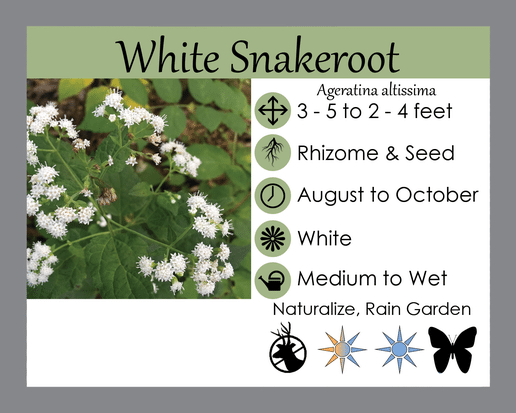
Latin Name: Ageratina altissima or Eupatorium rugosum
Common Name: white snakeroot
Type: Herbaceous perennial
Family: Asteraceae
Height: 3.00 to 5.00 feet
Spread: 2.00 to 4.00 feet
Root: Spreads quickly by Rhizomes and Seed
Bloom Time: September to frost
Bloom Description: White
Sun: Part shade to dappled light, can be in full sun if soils are kept moist
Water: Medium to wet
Maintenance: Medium
Suggested Use: Naturalize, Rain Garden
Flower: Showy
Attracts: Butterflies
Tolerate: Deer
(Information from Missouri Botanical Garden, Prairie Moon Nursery)
*
*